

Ebola outbreak could cost Africa over $3 billion, UN warns; epidemic unleashes socioeconomic crisis
Translated from Spanish, summarized and contextualized by DistantNews.
At a glance
News
Sources not specified
Context piece
- The Ebola epidemic in the Democratic Republic of Congo could cost Africa up to $3.6 billion and threaten tens of thousands of jobs, according to the UN Development Programme (UNDP).
- The UNDP warned the epidemic is causing a severe socioeconomic crisis that could push nearly a million more people into poverty.
- Restrictions on travel and trade, while necessary for containment, are devastating local economies and informal livelihoods.
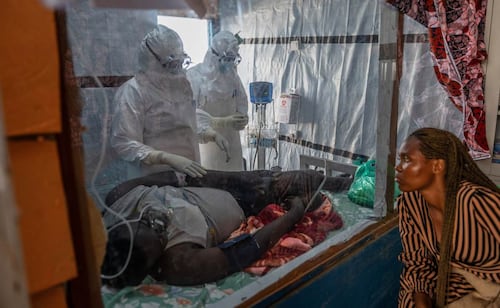
The Ebola epidemic in the Democratic Republic of Congo (DRC) poses a significant threat to Africa's economy, potentially costing up to $3.6 billion and jeopardizing tens of thousands of jobs, the UN Development Programme (UNDP) warned Wednesday.
The UNDP stated that the epidemic is triggering a profound socioeconomic crisis, with the potential to push an additional 985,000 people into poverty. This crisis risks eliminating numerous jobs, disrupting essential education and health services, and inflicting substantial economic damage on African economies if regional and global shocks intensify.
The crisis also runs the risk of eliminating tens of thousands of jobs, disrupting education and health services, and costing African economies up to $3.6 billion if wider regional and global shocks intensify.
While the immediate public health threat requires containment measures like quarantines, the UNDP noted that restrictions on travel and trade are severely impacting local economies and informal employment. The economic fallout is expected to disproportionately affect women in the DRC and its neighbors, including Uganda, Rwanda, and South Sudan.
In the DRC, 1,333 cases and 399 deaths have been confirmed, with 189 recoveries, according to the World Health Organization. The UNDP emphasized that viewing Ebola solely as a health challenge risks overlooking a much larger development emergency unfolding concurrently. The organization recommended direct cash transfers to vulnerable populations, selective border controls instead of blanket closures, and emergency financing mechanisms to sustain maternal, reproductive, and child health services.
Ebola does not stop at the hospital door. It affects livelihoods, education, food security, trade, public finances and confidence. If we treat this Ebola outbreak solely as a health challenge, we run the risk of missing the much larger development emergency that is unfolding around it.
DistantNews Editorial
Originally published by El Universal in Spanish. Translated, summarized, and contextualized by our editorial team with added local perspective. Read our editorial standards.
More Stories
From Our Blog

What Press Freedom Means for the News You Read

What Gets Lost (and Found) When News Is Translated

The Critical Role of Diaspora Media in Global News

What Travellers Should Know About Countries with Restricted Press

A Digital Nomad's Guide to Following Local News
