


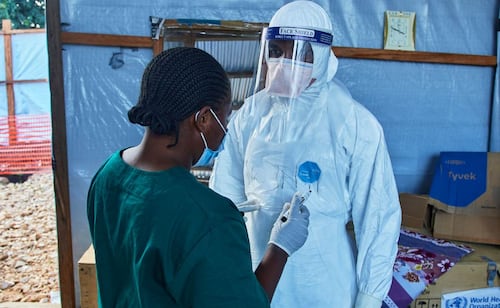
Ebola outbreak in Congo claims 600 lives as epidemic continues to expand
Translated from Spanish, summarized and contextualized by DistantNews.
At a glance
News
From a news agency
Ongoing story
- The Ebola outbreak in the Democratic Republic of Congo has caused 600 deaths, according to the World Health Organization (WHO).
- The epidemic is expanding, with current treatment centers operating at 90% capacity, straining the health response.
- Persistent insecurity, population displacement, and a fragile health system hinder control efforts, particularly in the northeastern province of Ituri.
The Ebola outbreak in the Democratic Republic of Congo (DRC) has claimed 600 lives, as reported by the World Health Organization (WHO) based on data from Congolese health authorities. The virus, transmitted through bodily fluids and causing hemorrhagic fever, has historically led to significant mortality across Africa.
The epidemic continues to expand and its true magnitude has not yet been fully determined.
Despite encouraging progress, the epidemic continues to expand, posing considerable challenges to containment efforts. WHO representative Anne Ancia stated that current treatment centers are operating at approximately 90% capacity, placing immense pressure on the healthcare response. The true scale of the outbreak remains difficult to ascertain, and it could persist for several more months.
The epicenter of the crisis is located in Ituri, a northeastern province bordering South Sudan and Uganda. The virus has also spread to the neighboring provinces of North Kivu and South Kivu. Factors such as population displacement, ongoing insecurity, and the fragility of the healthcare system are significantly impeding the ability to control the epidemic.
Despite encouraging advances, we continue to face significant challenges. The current treatment centers are operating at approximately 90% capacity, which exerts considerable pressure on the health response.
This seventeenth Ebola epidemic in the DRC, officially declared on May 15, is caused by the Bundibugyo variant, for which no vaccine or treatment currently exists. While a clinical trial for two treatments targeting this rare variant began on July 2, and emergency use of a molecular diagnostic test has been authorized, the situation remains critical. The WHO has highlighted the substantial humanitarian needs, particularly concerning civilian protection and access to essential health services and food.
Population displacement, persistent insecurity, and the fragility of the health system continue to hinder efforts to control the epidemic.
DistantNews Editorial
Originally published by El Universal in Spanish. Translated, summarized, and contextualized by our editorial team with added local perspective. Read our editorial standards.
More Stories



From Our Blog

What Press Freedom Means for the News You Read

What Gets Lost (and Found) When News Is Translated

The Critical Role of Diaspora Media in Global News

What Travellers Should Know About Countries with Restricted Press

A Digital Nomad's Guide to Following Local News
