


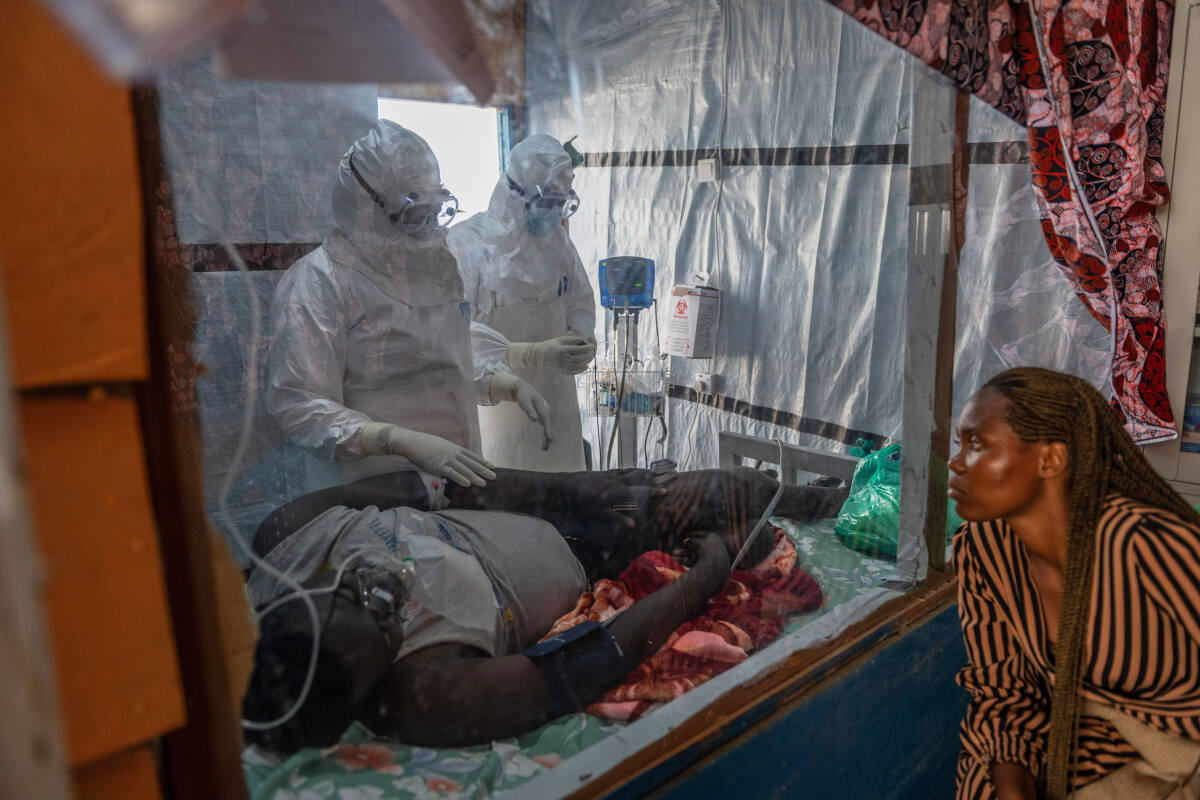
Ebola Outbreak in DRC and Uganda Raises Fears of Historic Epidemic; Treatment Trials Begin
Translated from Korean, summarized and contextualized by DistantNews.
At a glance
News
Sources not specified
Ongoing story
- An Ebola outbreak, primarily the Bundibugyo strain, has spread from the Democratic Republic of Congo to Uganda, raising fears of the largest epidemic on record.
- Health officials warn that without immediate containment, the outbreak could become historically significant, as current vaccines and standard treatments are ineffective against this strain.
- Efforts are underway to develop and test new vaccines and treatments, with clinical trials for a potential treatment beginning in July, but widespread containment remains challenging due to ongoing conflict and displacement.
The Democratic Republic of Congo and Uganda are grappling with a growing Ebola outbreak, primarily of the Bundibugyo strain, prompting warnings from health officials about the potential for the largest epidemic in history.
The outbreak, first confirmed in eastern DRC's Ituri province in mid-May, has since spread to Uganda. The Africa Centers for Disease Control and Prevention (Africa CDC) has cautioned that failure to contain the virus now could lead to an unprecedented epidemic. The situation is complicated by the lack of existing vaccines and standard treatments effective against the Bundibugyo strain.
As of July 11, the DRC had recorded 1,976 confirmed cases and 702 deaths, with dozens of new infections reported daily and treatment centers operating at capacity. Cases have also appeared outside Africa, with infections confirmed in France and Germany among individuals who had traveled from affected regions, though the risk to the general European population is considered low.
If we don't stop it now, it could be the largest Ebola outbreak in history.
Ebola, a viral hemorrhagic fever with an average fatality rate of 50%, spreads through direct contact with bodily fluids of infected individuals or contaminated objects. The current outbreak is exacerbated by long-standing conflict and insecurity in eastern DRC, leading to population displacement and dense living conditions in refugee camps, which facilitate transmission. Safe burial practices are also a challenge in these areas.
International health organizations are accelerating efforts to develop new medical countermeasures. Clinical trials for a potential treatment, involving antibody therapy MBP-134 and the antiviral remdesivir, began in the DRC in early July. However, the development of effective vaccines is also a priority, with candidates utilizing platforms like mRNA and viral vectors undergoing testing. Experts estimate that a viable vaccine candidate could take at least six to nine months to become available. The Africa CDC emphasizes that addressing humanitarian issues, particularly in displacement camps, is crucial for effective containment.
We cannot stop this epidemic without solving the humanitarian problem.
DistantNews Editorial
Originally published by Dong-A Ilbo in Korean. Translated, summarized, and contextualized by our editorial team with added local perspective. Read our editorial standards.
More Stories



From Our Blog

What Gets Lost (and Found) When News Is Translated

The Critical Role of Diaspora Media in Global News

What Travellers Should Know About Countries with Restricted Press

A Digital Nomad's Guide to Following Local News

How the Same Story Looks Different in Different Countries
