


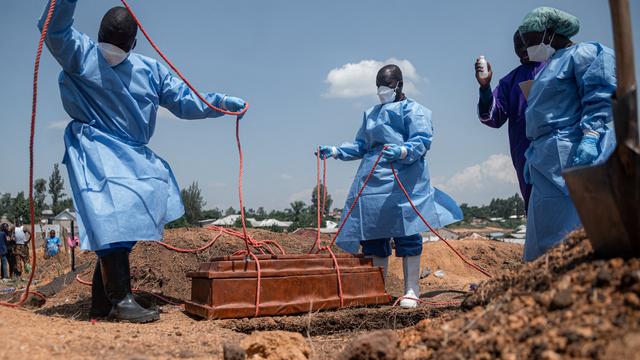
Ebola outbreak in DRC claims over 1,000 lives, fastest on record
Translated from German, summarized and contextualized by DistantNews.
At a glance
News
From a news agency
Ongoing story
- The Ebola outbreak in the Democratic Republic of Congo has claimed over 1,000 lives and infected more than 2,500 people.
- This outbreak, ongoing since mid-May, is the fastest-spreading Ebola outbreak on record and is attributed to the Bundibugyo variant.
- The affected region, primarily Ituri province, lacks a licensed vaccine or recognized treatment for this variant, highlighting a critical funding and resource gap.
The Democratic Republic of Congo is grappling with a devastating Ebola outbreak that has officially claimed more than 1,000 lives and confirmed over 2,500 infections. The National Institute for Public Health reported 1,033 deaths and 2,536 confirmed cases as of the latest figures. Approximately 740 patients remain in isolation or under hospital care, according to the Ministry of Health.
This outbreak, which began in mid-May, is already recognized as the fastest-spreading Ebola epidemic since records began. It is linked to the Bundibugyo variant of the virus, a strain for which there is currently no approved vaccine or established treatment. This lack of medical countermeasures poses a significant challenge to containment efforts.
Dr. John Nkengasong, Director General of the Africa CDC, expressed grave concern at a health summit, stating, "These people are dying. They are dying because we don't have vaccines, we don't have medicines, and we don't have the financial resources." His remarks underscore the critical need for international support and funding to combat the epidemic effectively.
The Ituri province in the country's northeast is the most heavily affected region. While some cases were initially reported in neighboring Uganda, resulting in two deaths, no new cases have been registered there since June 21 following rigorous contact tracing. The ongoing crisis highlights the vulnerability of the region and the urgent need for global solidarity in addressing public health emergencies.
These people are dying. They are dying because we don't have vaccines, we don't have medicines, and we don't have the financial resources.
DistantNews Editorial
Originally published by Die Zeit in German. Translated, summarized, and contextualized by our editorial team with added local perspective. Read our editorial standards.
More Stories



From Our Blog

What Gets Lost (and Found) When News Is Translated

How the Same Story Looks Different in Different Countries

The Critical Role of Diaspora Media in Global News

What Travellers Should Know About Countries with Restricted Press

A Digital Nomad's Guide to Following Local News
