


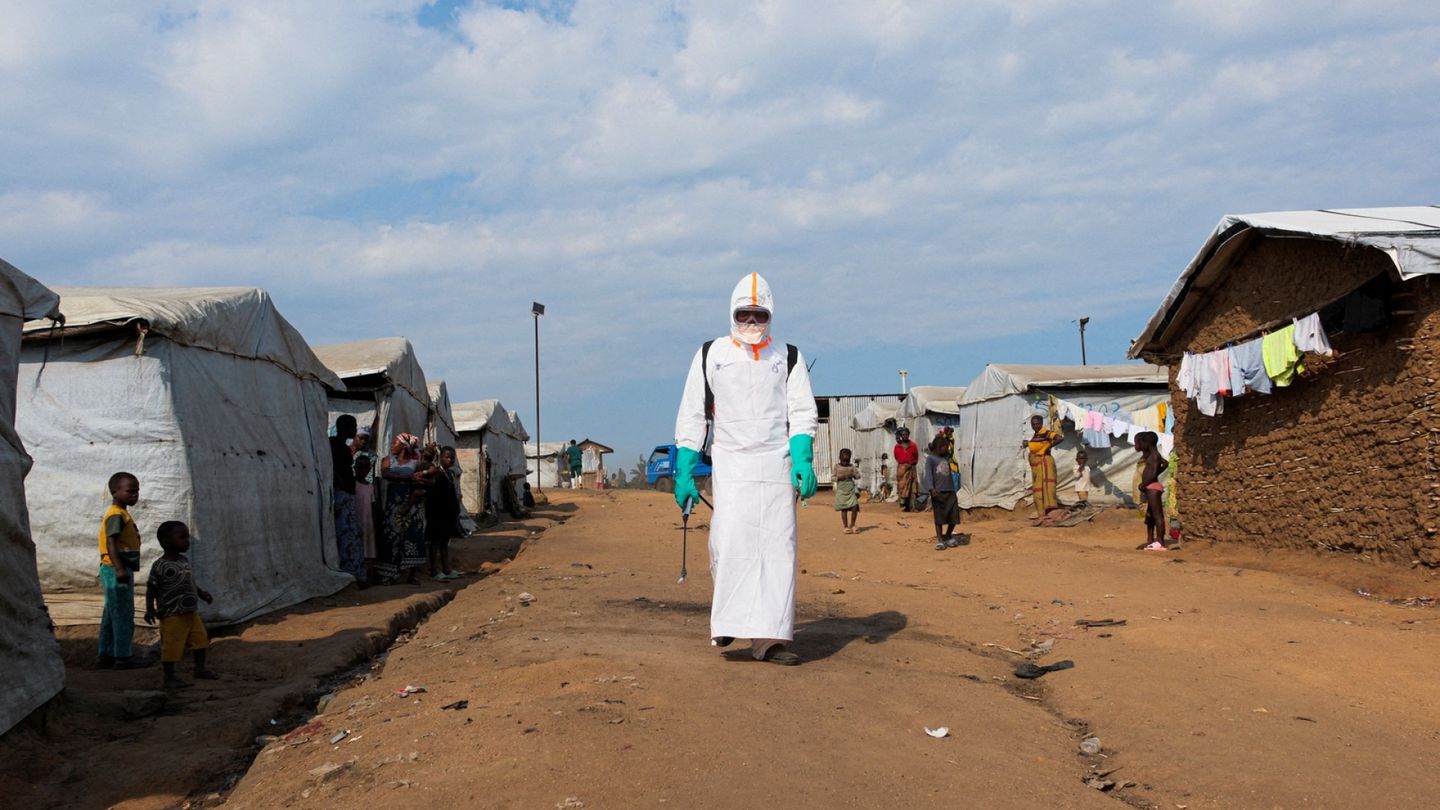
Ebola: Over 1,000 Confirmed Cases in Congo; Rare Strain Sparks Fears of Worsening Epidemic
Translated from Finnish, summarized and contextualized by DistantNews.
At a glance
News
Sources not specified
Ongoing story
- Over 1,000 confirmed Ebola cases have been reported in the Democratic Republic of Congo, with 254 deaths.
- The outbreak involves a rare Bundibugyo strain of the virus for which no treatment exists.
- Health officials warn the epidemic could worsen without increased funding, and containment may take up to a year due to community resistance and lack of treatment centers.
The Democratic Republic of Congo is grappling with an Ebola outbreak that has surpassed 1,000 confirmed cases, according to Reuters. The government reports 1,003 confirmed cases and 254 deaths since the epidemic began just over a month ago. This outbreak is caused by the rare Bundibugyo strain of the Ebola virus, a variant for which no specific treatment is currently available.
Health experts express significant concern over the rapid spread of the virus. The Africa Centers for Disease Control and Prevention warns that this epidemic could potentially be more severe than the 2014-2016 West Africa Ebola outbreak, which claimed over 11,000 lives. African health authorities estimate that without swift additional funding, controlling the epidemic will become increasingly difficult, potentially costing billions of dollars.
The Red Cross indicates that the epidemic has not yet peaked, and containment efforts could take as long as a year. Efforts to control the outbreak are hampered by a shortage of treatment centers and resistance from local communities to strict hygiene measures. The virus spreads through direct contact with bodily fluids or blood, and infected individuals become contagious only after symptoms appear, with an incubation period of up to three weeks. Traditional funerals, where mourners handle the deceased without proper protective gear, are identified as a major driver of transmission, as bodies of those who died from Ebola are highly infectious. Approximately one-third of the local population reportedly does not believe in the epidemic, leading to instances of patients escaping treatment centers.
DistantNews Editorial
Originally published by Helsingin Sanomat in Finnish. Translated, summarized, and contextualized by our editorial team with added local perspective. Read our editorial standards.
More Stories


From Our Blog

What Gets Lost (and Found) When News Is Translated

The Critical Role of Diaspora Media in Global News

What Travellers Should Know About Countries with Restricted Press

A Digital Nomad's Guide to Following Local News

How the Same Story Looks Different in Different Countries
