

ECB: Green transition can cut inflation and shield European economy
Translated from Greek, summarized and contextualized by DistantNews.
At a glance
News
Official statement
Context piece
- The European Central Bank suggests the green transition can reduce inflation and strengthen the European economy.
- Moving away from fossil fuels could curb inflationary pressures and enhance Europe's energy security.
- This transition is seen as a way to mitigate risks from geopolitical crises.
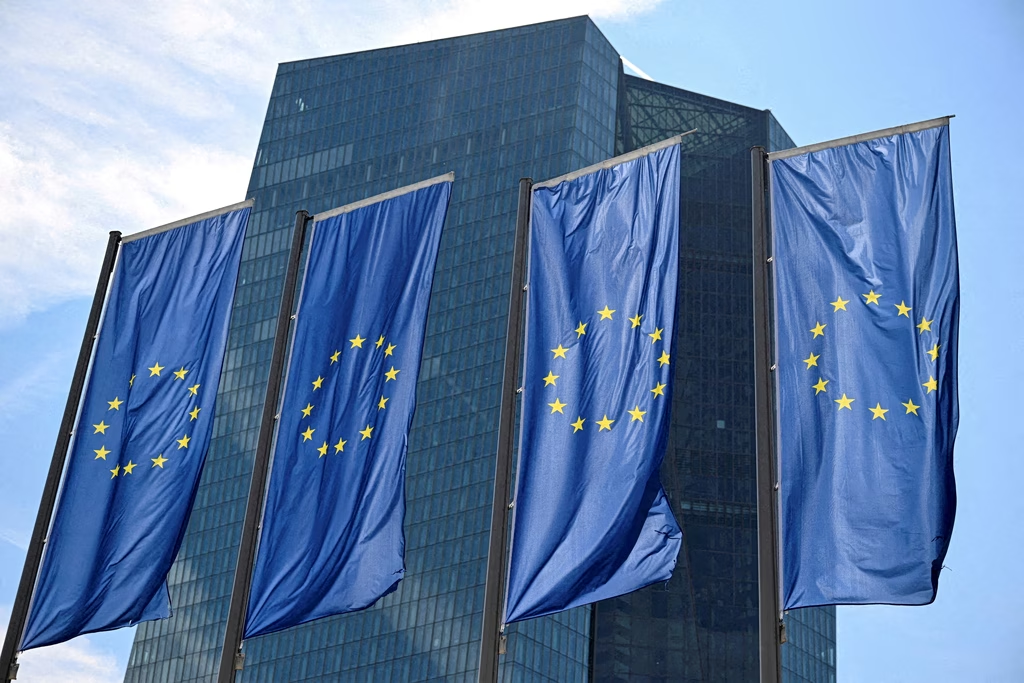
The European Central Bank (ECB) posits that the green transition offers a pathway to reduce inflation and bolster the European economy. Frank Elderson, a member of the ECB's Executive Board, argues that decoupling from fossil fuels can significantly limit inflationary pressures.
Elderson's perspective emphasizes that reliance on volatile global fossil fuel markets exposes Europe to price shocks and geopolitical instability. By shifting towards renewable energy sources, the region can enhance its energy security and insulate its economy from external disruptions. This strategic move is viewed as crucial for long-term economic stability and resilience.
The green transition can reduce inflation and shield the European economy.
The ECB's view suggests that environmental sustainability and economic prosperity are increasingly intertwined. The transition to cleaner energy is not merely an ecological imperative but also an economic strategy that can yield tangible benefits, including lower and more stable prices for consumers and businesses. This aligns with broader European goals of achieving climate neutrality while maintaining economic competitiveness.
Decoupling from fossil fuels will limit inflationary pressures and strengthen Europe's energy security against geopolitical crises.
DistantNews Editorial
Originally published by Ta Nea in Greek. Translated, summarized, and contextualized by our editorial team with added local perspective. Read our editorial standards.
More Stories
From Our Blog

What Gets Lost (and Found) When News Is Translated

The Critical Role of Diaspora Media in Global News

What Travellers Should Know About Countries with Restricted Press

A Digital Nomad's Guide to Following Local News

How the Same Story Looks Different in Different Countries
