


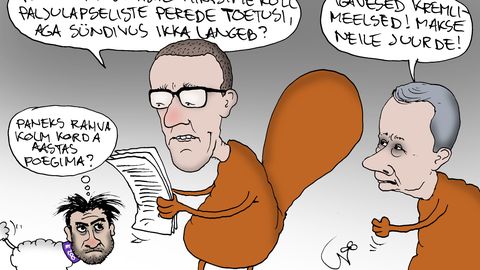
EDITORIAL⟩ Population is a Matter of the People
Translated from Estonian, summarized and contextualized by DistantNews.
TLDR
- Estonia's population is declining, with a decrease of over 9,000 people last year and a falling birth rate for several years.
- A new think tank, Põhimõtte Koda, has released a report highlighting demography as a critical factor impacting Estonian culture and advocating for a cross-party agreement to boost birth rates.
- The report emphasizes the need to shift societal attitudes, recognizing children as a public good and restoring honor to motherhood and fatherhood to counter national decline.
The recent report by Põhimõtte Koda, titled "The Vitality of Estonian Culture in the Era of Culture Wars," starkly addresses a demographic crisis that threatens the very fabric of our nation. As highlighted by literary scholar Maarja Vaino, the declining Estonian population is not merely a statistic; it represents a quiet course towards extinction and the erosion of our unique culture through assimilation.
Estonia's population is declining, with a decrease of over 9,000 people last year and a falling birth rate for several years.
For years, Estonia has grappled with a shrinking population, a trend that saw a concerning reversal in the rändesaldo (migration balance) last year after a decade of growth. This demographic downturn is not a new phenomenon; UN reports decades ago predicted a population below one million by 2050. While the introduction of the parental benefit system in the early 2000s, a testament to a broad societal consensus at the time, temporarily reversed this trend and proved its positive impact through scientific analysis, a disturbing trend has emerged.
Children are a societal good and motherhood and fatherhood need greater recognition.
Regrettably, certain political circles have engaged in the vilification of parental benefits and other family policies. This has created a toxic atmosphere where the very concepts of birth rates and motherhood are demonized, exemplified by what the report terms the "particularly nation-hostile family policy" of the Reform Party. This relentless negativity has sapped the national will to confront this crisis and has led to a pervasive sense of fatalism, where national decline is accepted as an inevitable fate.
If the number of Estonians decreases, it does not only mean a quiet course of extinction for Estonians but also promotes dissolution into other cultures.
Põhimõtte Koda aims to inject a much-needed dose of realism and proactive change into this discourse. We believe that children are not solely a private matter but a societal asset. Motherhood, fatherhood, and the raising of children must be elevated once more to a position of honor and dignity within society. This is not about lamenting the difficulties of family life, as some might erroneously do by seeking excuses, but about fostering a national commitment to our future. The vitality of Estonian culture, our economy, and indeed all aspects of our national life depend on our collective resolve to address this demographic challenge head-on.
Children are not just a private matter, but also a public good. Motherhood, fatherhood, and raising children must once again be held in high esteem in society as a dignified axis of a person's life.
DistantNews Editorial
Originally published by Postimees in Estonian. Translated, summarized, and contextualized by our editorial team with added local perspective. Read our editorial standards.
More Stories

/nginx/o/2024/05/24/16094937t1h394a.jpg)
From Our Blog

What Gets Lost (and Found) When News Is Translated

The Critical Role of Diaspora Media in Global News

What Travellers Should Know About Countries with Restricted Press

A Digital Nomad's Guide to Following Local News

How the Same Story Looks Different in Different Countries
