


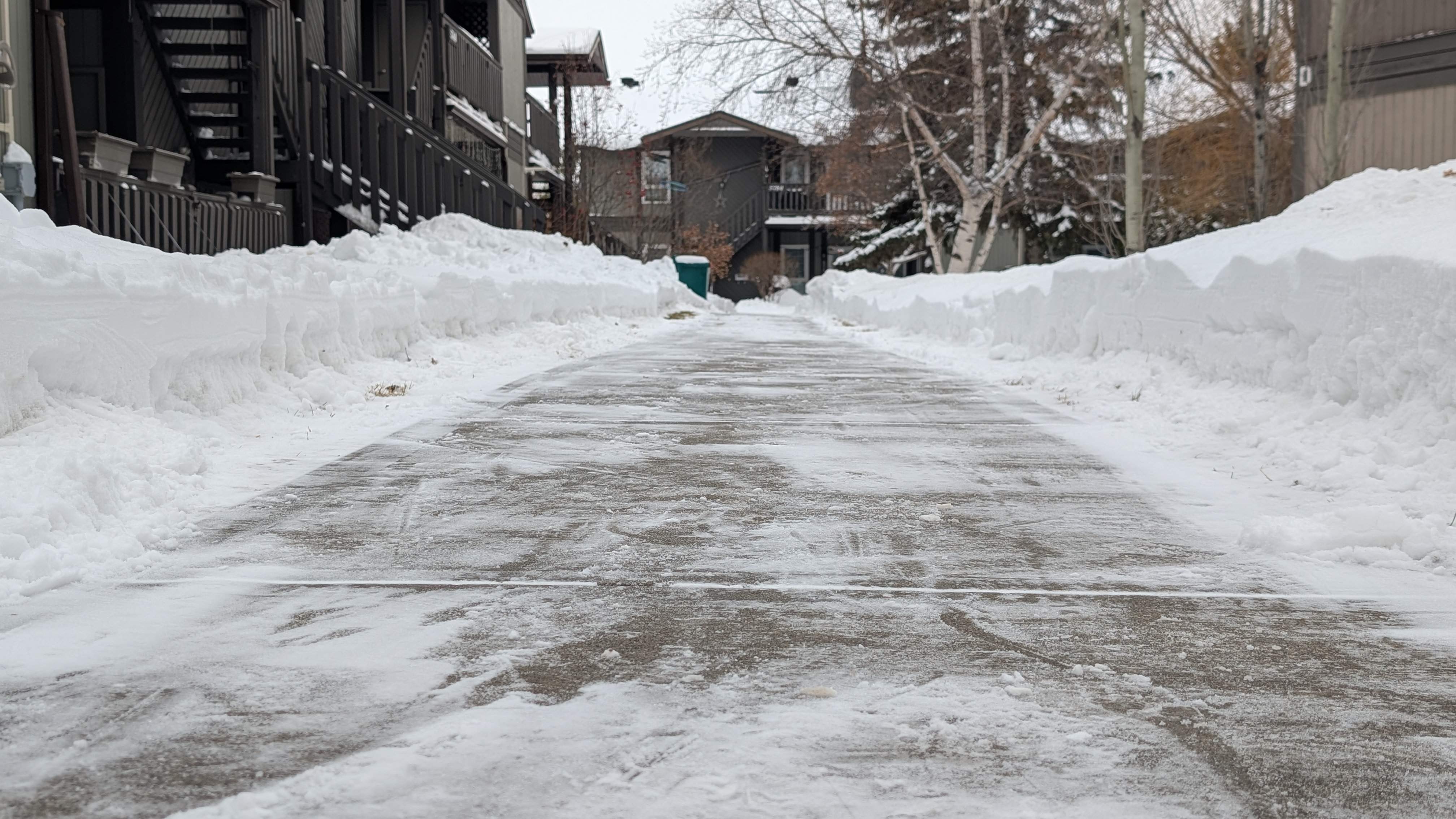
Edmonton plans changes to improve snow and ice clearing
Translated from English and summarized by DistantNews. Read the original for the full story.
At a glance
News
Named sources
New plan
- Edmonton is updating its snow and ice clearing policy after heavy snowfall last winter, with accessibility included in the review.
- Proposed changes include monthly residential street blading when needed and improved equipment readiness for priority roads and pathways.
- The city does not currently plan to bring back calcium chloride, despite data showing it improved road safety, because residents raised concerns about damage to vehicles and infrastructure.
Edmonton is revising its snow and ice clearing policy after last winter brought unusually large amounts of snow, with city officials promising improvements that should make streets and pathways more accessible.
I think the main takeaways in that service package is that you’re gonna see improvements in every aspect of what we’re doing.
The proposed changes include moving residential street blading to a monthly schedule when necessary. Officials also say they are working with fleet staff to ensure the equipment needed for winter operations is available and positioned when snowfall arrives.
Mayor Andrew Knack said the plan should allow crews to clear Priority 1 and 2 roads and active pathways more quickly. That, he said, would support accessibility, movement around the city and public safety.
Overall, it’s just the optimization of what we do currently.
One measure remains off the table for now. Edmonton has discussed bringing back calcium chloride, an anti-icing agent used on arterial and collector roads during pilot projects in 2017 and 2018. The city stopped using it in 2019 after concerns about damage to vehicles, concrete and infrastructure.
When it was tested, it did actually make our streets safer, there was clear data that showed that. But we’ve also heard overwhelmingly from Edmontonians, time and time again, they don’t want this.
Knack said testing showed that calcium chloride made streets safer, but added that Edmontonians had repeatedly opposed its return. The chemical has a lower freezing point than salt and can prevent snow from sticking to pavement. However, lower vehicle speeds on city streets can leave wet calcium chloride accumulating on vehicles and entering their parts. Arthur Potts, an Edmonton chemical engineer, also told the committee that the chemical remains wet for a long time and can contribute to corrosion.
I think they’re going in the right direction.
About this summary
Originally published by Global News in English. Translated, summarized, and contextualized automatically by DistantNews, with a note on how the source frames the story. Not individually reviewed before publishing. How this works.
More Stories


From Our Blog

What Gets Lost (and Found) When News Is Translated

The Critical Role of Diaspora Media in Global News

What Travellers Should Know About Countries with Restricted Press

A Digital Nomad's Guide to Following Local News

How the Same Story Looks Different in Different Countries
