


Education expert warns UEC recognition could divide Malaysian society
Translated from Malay, summarized and contextualized by DistantNews.
At a glance
News
Named sources
Context piece
- An education expert warns that recognizing the Unified Examination Certificate (UEC) could create two separate education streams in Malaysia, potentially harming national unity.
- Dr. Anuar Ahmad of UKM argues that UEC operates outside the national education system, using its own curriculum and exams, which conflicts with national education policies.
- He believes that recognizing UEC, even partially, challenges the foundation of Malaysia's national education policy and could lead to further social division.
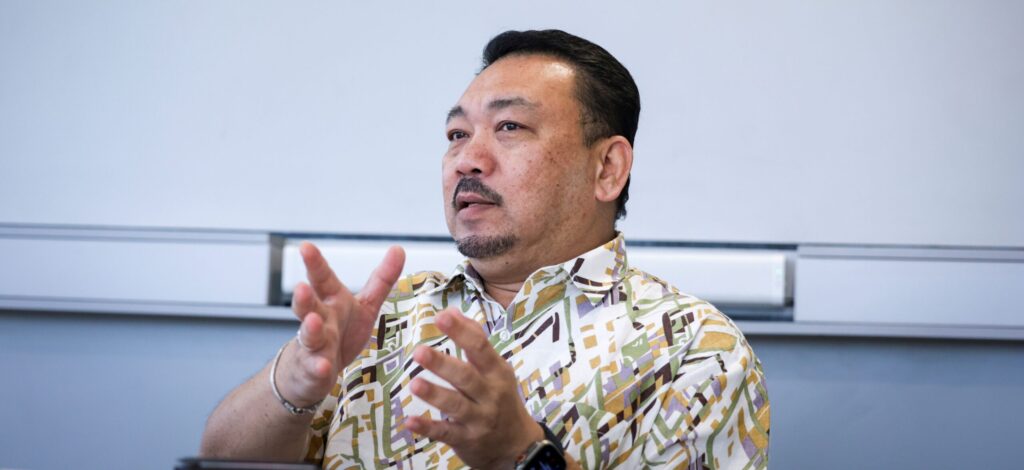
Recognizing Malaysia's Unified Examination Certificate (UEC) would significantly impact the nation's social structure, potentially creating two entirely separate education streams, according to education expert Dr. Anuar Ahmad.
If UEC is recognized, the country is feared to have two completely separate education streams, namely the national stream and the non-national stream.
Dr. Anuar, Deputy Director of the Institute for Malaysian Development and Inclusive Advancement (Minda) at Universiti Kebangsaan Malaysia (UKM), stated that full or partial recognition of UEC, or even just "opening the path" for it, would lead to a divided society. He fears students would grow up in isolated groups, undermining education's role as a tool for national unity.
Education should be a tool for uniting society, not a space that reinforces social separation.
Malaysia's education system has long aimed to unite its diverse population while celebrating its variety, a principle that led to the establishment of national-type schools. Unlike these schools, which adhere to the national curriculum and use Malay as the medium of instruction, UEC operates independently. It uses its own curriculum and examinations developed by Dong Zong, a Chinese education group.
The question is, how do we recognize a system that does not meet the main basis of the national education policy?
Dr. Anuar questions how a system outside the national framework can be recognized. He argues that acknowledging UEC challenges the core principles of Malaysia's national education policy, which is enshrined in the constitution and the Education Act. This recognition, he believes, is not about ethnicity but about safeguarding the nation's educational foundation. The potential for a dualistic system, separating national and non-national streams from primary school to university, could exacerbate social divisions and make building national unity more difficult.
If UEC is recognized, whether fully, partially, or in the name of 'opening the path,' it will still challenge the national education policy that has been finalized based on the Constitution and the Education Act.
DistantNews Editorial
Originally published by Utusan Malaysia in Malay. Translated, summarized, and contextualized by our editorial team with added local perspective. Read our editorial standards.
More Stories



From Our Blog

What Gets Lost (and Found) When News Is Translated

The Critical Role of Diaspora Media in Global News

What Travellers Should Know About Countries with Restricted Press

A Digital Nomad's Guide to Following Local News

How the Same Story Looks Different in Different Countries
