


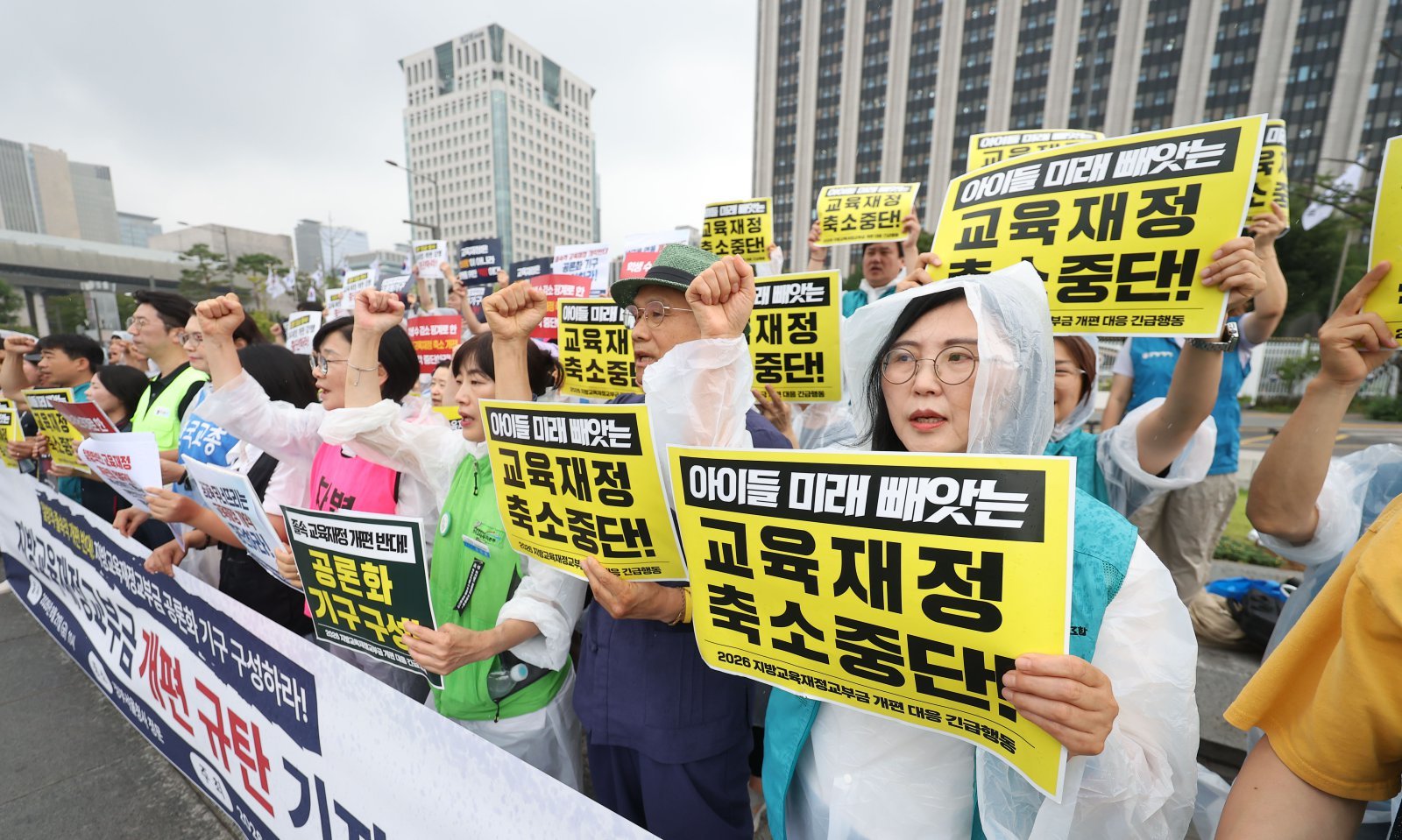
Education sector protests government's education finance reform: 'Personnel cost increases alone will consume the extra funds'
Translated from Korean, summarized and contextualized by DistantNews.
At a glance
News
Named sources
New plan
- Education groups are protesting the government's proposed revision of the local education finance revenue sharing system, set to take effect in 2026.
- They argue that while the government claims increased funding, the actual usable funds for education will decrease after accounting for rising personnel and operational costs.
- Critics also express concern that the proposed changes shift control of education funds from local education offices to the central government.
South Korean education groups are vehemently opposing the government's planned overhaul of the local education finance revenue sharing system, slated for implementation in 2026. The government asserts that the revision will not lead to a reduction in education funding, citing an projected increase of approximately 2.5 trillion won. However, educational organizations argue this figure is misleading, as the natural increase in costs for teacher salaries alone is expected to consume nearly all of the additional funds.
The actual reduction in scale compared to the current system must be disclosed.
A coalition of 363 educational organizations, including teachers, public education officials, and parent groups, issued a statement criticizing the government's figures. They contend that when the natural annual increase in personnel costs, estimated between 2.4 to 2.8 trillion won, is factored in, the actual funds available for education will shrink. This, they argue, does not even account for rising operational costs due to inflation, increased demand for special education, and student mental health services.
Transfer of education office finances to the central government will damage local education autonomy.
Furthermore, the groups are alarmed by the proposed shift in financial control. Under the current system, a fixed percentage of national taxes is allocated to local education offices, ensuring stable funding. The government's new plan, however, would move a significant portion of these funds into a 'future response fund' managed by the central government. Critics argue this move undermines local educational autonomy and allows the central government to dictate how funds are allocated, raising concerns about transparency and the potential for reduced local discretion in educational matters.
Even if the government's new formula results in a 2.5 trillion won increase in revenue sharing next year, it represents a clear reduction in local education finance if the amount received is significantly less than what would have been provided under the current system.
DistantNews Editorial
Originally published by Dong-A Ilbo in Korean. Translated, summarized, and contextualized by our editorial team with added local perspective. Read our editorial standards.
More Stories


From Our Blog

What Gets Lost (and Found) When News Is Translated

The Critical Role of Diaspora Media in Global News

What Travellers Should Know About Countries with Restricted Press

A Digital Nomad's Guide to Following Local News

How the Same Story Looks Different in Different Countries
