


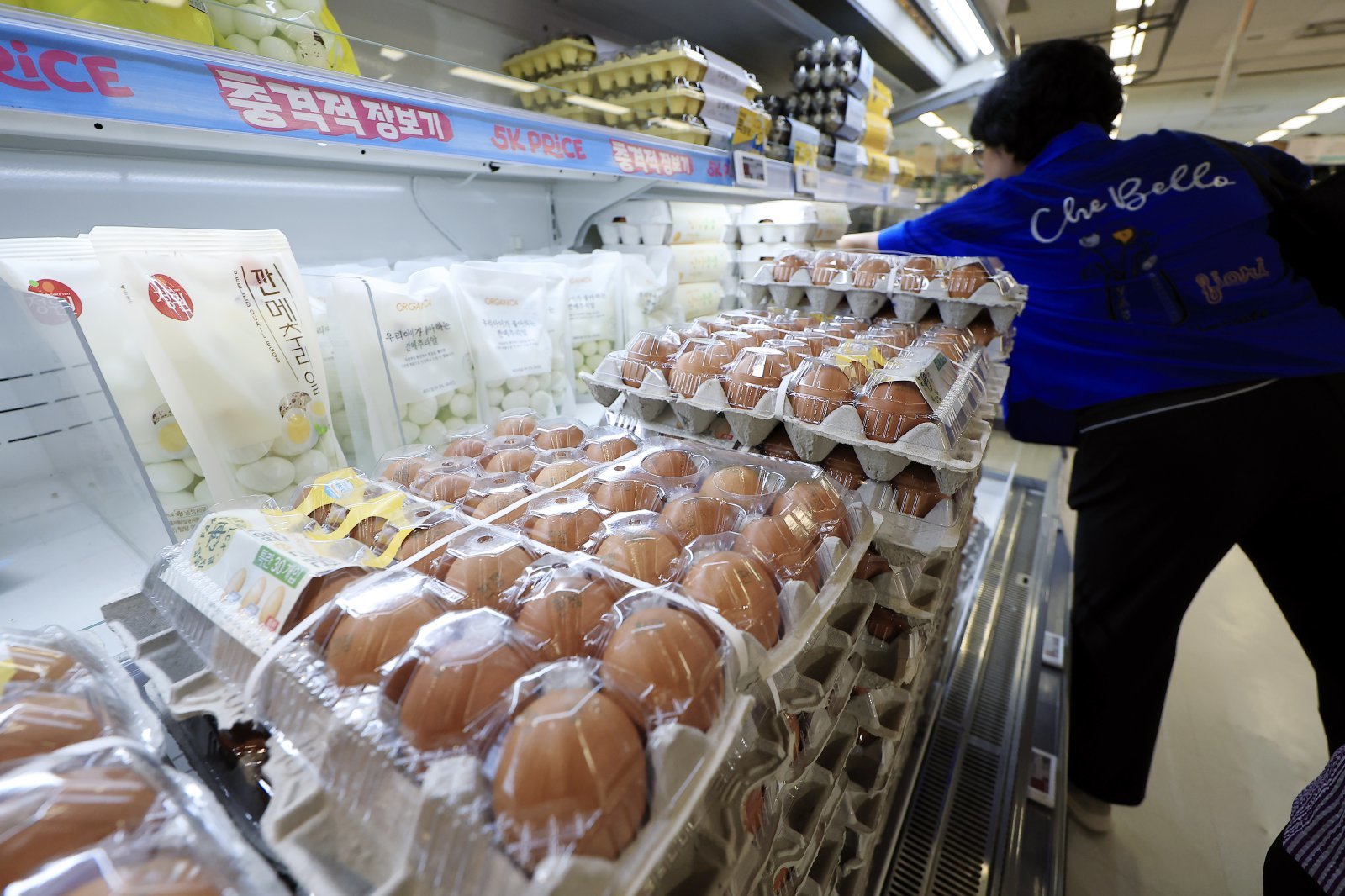
Egg prices near 8,000 won per carton amid AI-driven shortages
Translated from Korean, summarized and contextualized by DistantNews.
At a glance
News
Documents & data
Ongoing story
- The average price for a carton of 30 eggs in South Korea has surpassed 7,400 won, with some regions nearing 8,000 won.
- This price surge is attributed to supply shortages caused by avian influenza (AI) outbreaks.
- The government is implementing measures such as limiting discounted egg purchases to one carton per person and importing eggs from Brazil to stabilize prices.
Egg prices in South Korea are soaring, placing a significant burden on consumers. The average retail price for a carton of 30 eggs has exceeded 7,400 won, with prices in the Gyeonggi region reaching nearly 8,000 won. This sharp increase is primarily due to supply shortages stemming from highly pathogenic avian influenza (AI) outbreaks.
The price hike has prompted major hypermarkets like E-Mart and Lotte Mart to implement a "one carton per person" purchase limit on discounted eggs. This measure aims to prevent bulk buying and ensure wider access to the subsidized products. Some retailers, like Traders, are also limiting purchases to a maximum of two cartons per person, depending on stock availability.
In response to the supply crunch, the government is intensifying efforts to stabilize the market. Beyond the existing imports from the United States and Thailand, South Korea plans to import 20 million eggs from Brazil, marking the first time Brazilian eggs will be brought into the country. This diversification of import sources is intended to alleviate the supply deficit.
To further ease consumer burden, the government has extended its subsidy program, offering a 1,500 won discount per carton of eggs until July 1. Additional support is being provided for other essential agricultural and livestock products, including rice, beef, and pork, through discounts and expanded tariff quotas. The Ministry of Agriculture, Food and Rural Affairs also acknowledged that inefficiencies in the distribution structure contribute to high egg prices, and efforts are underway to improve transaction practices between farmers and distributors.
DistantNews Editorial
Originally published by Dong-A Ilbo in Korean. Translated, summarized, and contextualized by our editorial team with added local perspective. Read our editorial standards.
More Stories



From Our Blog

What Gets Lost (and Found) When News Is Translated

The Critical Role of Diaspora Media in Global News

What Travellers Should Know About Countries with Restricted Press

A Digital Nomad's Guide to Following Local News

How the Same Story Looks Different in Different Countries
