


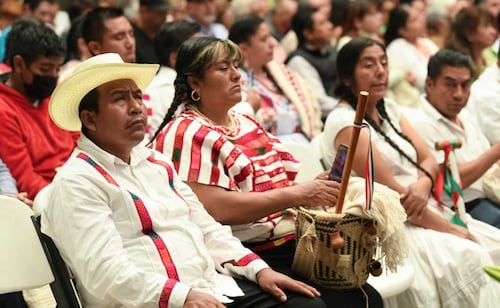
Eight indigenous towns and two communities added to Mexico City's official registry
Translated from Spanish, summarized and contextualized by DistantNews.
At a glance
News
Official statement
New plan
- Mexico City's Secretariat of Peoples and Indigenous Barrios and Resident Communities has officially incorporated eight indigenous towns and two indigenous communities into its registry.
- The newly recognized towns and communities meet the criteria set forth in the city's constitution and relevant laws.
- This inclusion aims to recognize and document the presence of these original peoples and resident indigenous communities within the capital.
Mexico City has officially recognized eight indigenous towns and two indigenous communities by incorporating them into the System for the Registration and Documentation of Original Towns and Resident Indigenous Communities. The Secretariat of Peoples and Indigenous Barrios and Resident Communities announced the inclusion, marking a significant step in acknowledging the ancestral presence within the capital.
The recognized indigenous towns are Santa María Nonoalco in Álvaro Obregón; Santa Úrsula Coapa in Coyoacán; Santiago Atepetlac and Santiago Atzacoalco in Gustavo A. Madero; and Santa Marta Acatitla, Santa María Aztahuacan, Santiago Acahualtepec, and San Andrés Tetepilco, all in Iztapalapa.
According to the official gazette, these towns satisfy the objective and subjective criteria established by the Political Constitution of Mexico City and the Law on the Rights of Original Towns and Resident Indigenous Communities. This legal framework ensures their historical and cultural rights are acknowledged within the urban landscape.
Additionally, two indigenous communities residing in Mexico City have been added to the registry. These are the "Comunidad Triqui de Potrero" from San Juan Copala, Oaxaca, belonging to the Triqui Indigenous People, and the "Comunidad Ndo' Yo Ita, Nunuma" from Santo Tomás Ocotepec, Tlaxiaco, Oaxaca, which is part of the Mixtec Indigenous People. Their inclusion further diversifies the recognized indigenous fabric of the city.
DistantNews Editorial
Originally published by El Universal in Spanish. Translated, summarized, and contextualized by our editorial team with added local perspective. Read our editorial standards.
More Stories

From Our Blog

What Press Freedom Means for the News You Read

What Gets Lost (and Found) When News Is Translated

The Critical Role of Diaspora Media in Global News

What Travellers Should Know About Countries with Restricted Press

A Digital Nomad's Guide to Following Local News
