

El Niño weather pattern has begun, US agency NOAA confirms
Translated from English, summarized and contextualized by DistantNews.
At a glance
News
Official statement
New plan
- The US National Oceanic and Atmospheric Administration (NOAA) has confirmed the arrival of the El Niño weather pattern.
- Scientists expect El Niño to intensify, potentially reaching historic strength by year's end.
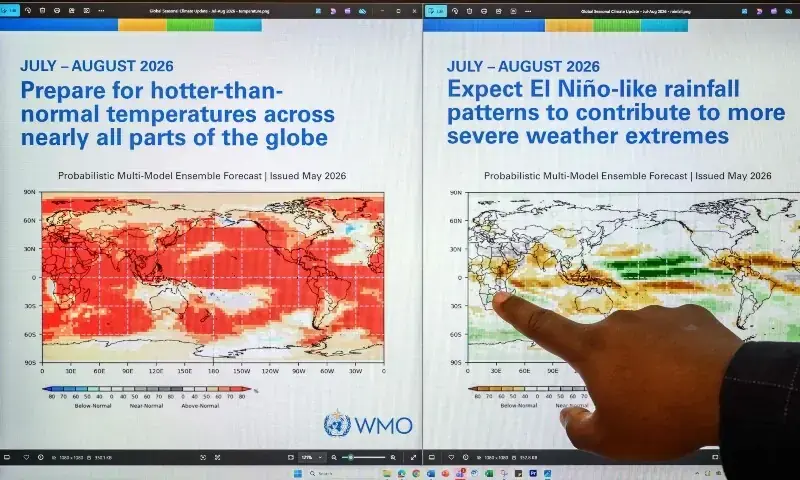
- El Niño is a natural phenomenon that warms Pacific Ocean surface temperatures, causing global weather pattern changes and potentially exacerbating extreme weather events.
The United States' National Oceanic and Atmospheric Administration (NOAA) has officially declared that the El Niño weather pattern has begun. Scientists monitoring the phenomenon anticipate it will strengthen significantly through the end of the year, with projections suggesting it could reach historic levels of intensity.
El Niño is a naturally occurring climate event characterized by the warming of surface temperatures in the central and eastern equatorial Pacific Ocean. This warming triggers widespread alterations in global wind patterns, rainfall distribution, and overall weather stability. The arrival of El Niño typically signals a period of more erratic and extreme weather conditions worldwide.
El Nino conditions developed over the past month.
Forecasters are concerned that this El Niño event could amplify the effects of ongoing global warming caused by the burning of fossil fuels. The combination of a naturally warming ocean phenomenon and human-induced climate change raises fears of more severe weather extremes. NOAA scientists noted that above-average sea surface temperatures in the Pacific over the past month were key indicators of El Niño's development. There is a 63 percent probability of a very strong El Niño occurring between November and January.
There is a 63 per cent chance of a very strong El Nino during November-January that would rank am
DistantNews Editorial
Originally published by Dawn in English. Translated, summarized, and contextualized by our editorial team with added local perspective. Read our editorial standards.
More Stories


From Our Blog

What Gets Lost (and Found) When News Is Translated

The Critical Role of Diaspora Media in Global News

What Travellers Should Know About Countries with Restricted Press

A Digital Nomad's Guide to Following Local News

How the Same Story Looks Different in Different Countries
