


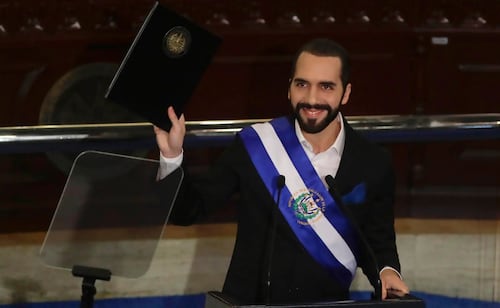
El Salvador Opposition Names Candidates as Bukele Seeks Extended Power
Translated from Spanish, summarized and contextualized by DistantNews.
At a glance
News
Named sources
Context piece
- El Salvador's traditional parties, Arena and FMLN, have named their presidential candidates to challenge President Nayib Bukele in the upcoming February elections.
- Both candidates, Mayteé Iraheta (Arena) and Rafael Aguirre (FMLN), face significant challenges against Bukele, who enjoys over 80% approval following his crackdown on gangs.
- Bukele is seeking a third term, which critics argue violates the constitution and enables authoritarian control, while human rights groups cite severe rights violations under the state of exception.
El Salvador's political landscape is set for a presidential election in February, with the traditional Arena and FMLN parties officially announcing their candidates. Mayteé Iraheta will represent the right-wing Arena party, while union leader Rafael Aguirre will run for the left-wing FMLN.
Both Iraheta and Aguirre face an uphill battle against incumbent President Nayib Bukele. Bukele, a 45-year-old former advertising executive, boasts an approval rating exceeding 80%. This popularity stems largely from his aggressive stance against gangs, which transformed El Salvador from one of the world's most violent countries.
We come to ratify our commitment (...) to present a different alternative to how things can be done.
Bukele, nominated by his own party Nuevas Ideas, is seeking a third term, which would extend his presidency until 2033. This pursuit of extended power comes after a controversial constitutional reform allowing indefinite re-election. Critics accuse Bukele of authoritarianism, pointing to his control over all branches of government.
Human rights organizations, including Amnesty International, have raised serious concerns about Bukele's security offensive. Operating under a state of exception, the crackdown has allegedly led to severe human rights violations, potentially amounting to crimes against humanity. Reports indicate that approximately 92,000 individuals have been detained without judicial orders, and political opponents have been silenced.
Her plan consists of 'protecting' the 'advances' in security, but these will be at the service of 'greater' collective 'progress' and not just for 'a sector'.
DistantNews Editorial
Originally published by El Universal in Spanish. Translated, summarized, and contextualized by our editorial team with added local perspective. Read our editorial standards.
More Stories

From Our Blog

What Press Freedom Means for the News You Read

What Gets Lost (and Found) When News Is Translated

The Critical Role of Diaspora Media in Global News

What Travellers Should Know About Countries with Restricted Press

A Digital Nomad's Guide to Following Local News
