


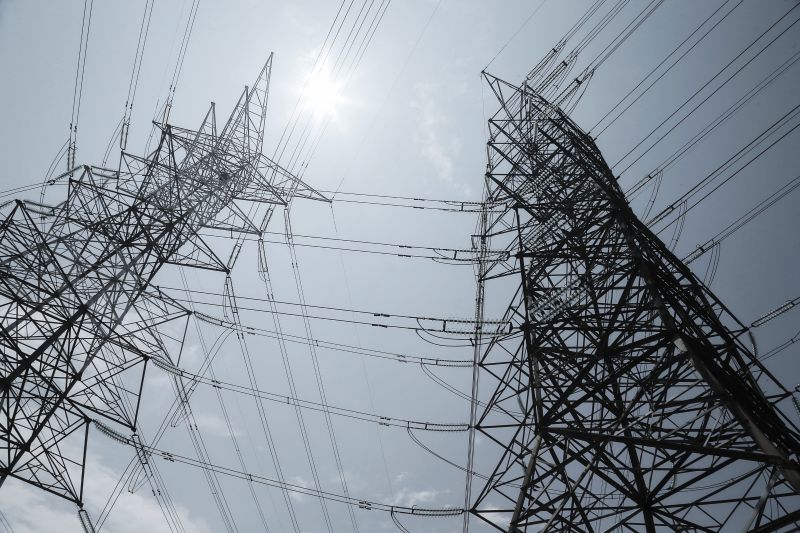
Electricity grid capacity is key to attracting data center investment in Malaysia
Translated from Malay, summarized and contextualized by DistantNews.
At a glance
News
Named sources
Context piece
- Malaysia's ability to attract data center investments is now critically dependent on the stability and capacity of its electricity grid, surpassing tax incentives.
- Global investors prioritize a consistent power supply, as data center operations are entirely reliant on uninterrupted electricity.
- Johor's success in attracting significant data center investments highlights the crucial role of energy infrastructure, with companies seeking rapid large-scale power connections.
The stability and capacity of Malaysia's electricity grid have emerged as the most critical factors in attracting data center investments, outweighing government tax incentives. Global investors in the data center sector consider a reliable electricity supply a primary condition for investment, given their complete dependence on continuous power.
Prof. Madya Dr. Aimi Zulhazmi Abdul Rashid, an economic analyst at UniKL Business School, explained that large-scale data centers, such as those with 100-megawatt capacity, consume energy equivalent to approximately 80,000 homes. He noted that companies like Google, Microsoft, and Nvidia are less concerned about cheap land if the electricity supply is unstable.
The success of Johor in attracting over RM30 billion in data center investments between 2023 and 2026 serves as a testament to the vital role of energy infrastructure. Key factors driving investments from companies like YTL, Equinix, AirTrunk, and GDS include the assurance of up to 2,000 MW of electricity supply for the Sedenak and Kulai regions. Investors are now focused on the speed of securing large-scale power connections rather than just the availability of electricity.
Data centers are essentially electric factories. A large-scale data center with a capacity of 100 megawatts uses energy equivalent to about 80,000 homes. Google, Microsoft or Nvidia do not think too much about cheap land if the electricity supply is unstable.
Looking ahead, Aimi Zulhazmi warned that grid constraints could become a major obstacle to the nation's economic growth if upgrades are not accelerated within the next five years. He projected that data centers alone could require up to 7,000 MW by 2035. When combined with the growing demand from electric vehicles, the semiconductor industry, and green hydrogen, the additional power demand could reach 19,000 MW, nearly doubling the current peak demand.
Economic analyst Prof. Emeritus Dr. Barjoyai Bardai emphasized the need for Malaysia to expedite efforts to strengthen and modernize its national electricity grid. This is crucial to ensure that the boom in data center investments and the transition to renewable energy do not compromise the country's long-term economic competitiveness. He pointed out that data center electricity consumption is expected to contribute significantly to the overall energy demand by 2035, placing considerable pressure on the existing grid system if capacity and infrastructure are not improved.
Investors are no longer asking whether there is enough electricity, but how quickly they can obtain a large-scale power connection. If the connection process becomes too long or the grid capacity becomes limited, investments can shift to other locations such as Batam or Thailand.
DistantNews Editorial
Originally published by Utusan Malaysia in Malay. Translated, summarized, and contextualized by our editorial team with added local perspective. Read our editorial standards.
More Stories



From Our Blog

What Gets Lost (and Found) When News Is Translated

The Critical Role of Diaspora Media in Global News

What Travellers Should Know About Countries with Restricted Press

A Digital Nomad's Guide to Following Local News

How the Same Story Looks Different in Different Countries
