


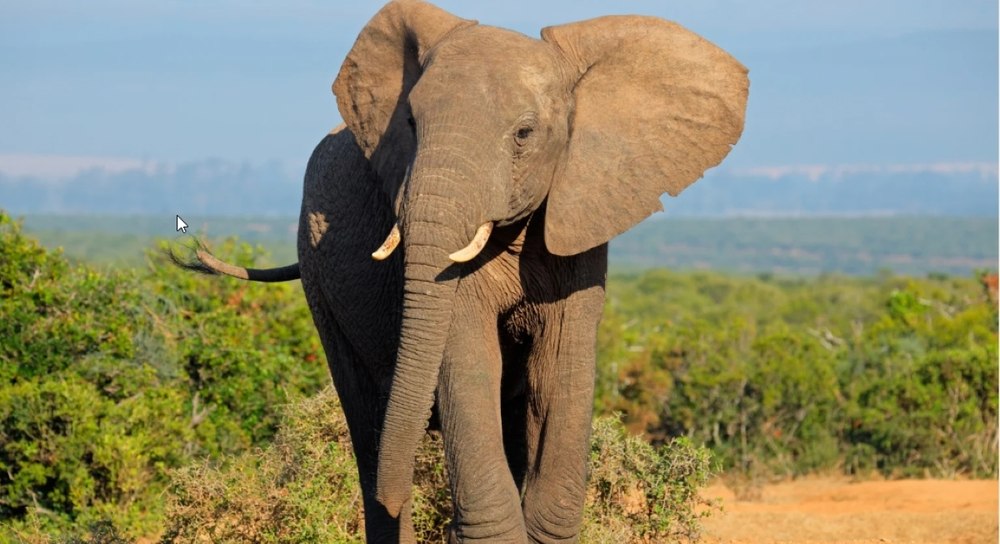
Elephant travels 12,000 km across four African countries, revealing ancient migration routes
Translated from Romanian, summarized and contextualized by DistantNews.
At a glance
News
Sources not specified
Context piece
- A young male elephant, designated Z16, traveled nearly 12,000 kilometers across southern Africa over two years.
- His GPS-tracked route reveals ancient elephant corridors and the human-made obstacles now blocking them.
- Researchers are studying these "invisible" paths to understand elephant migration in the Kavango-Zambezi Transfrontier Conservation Area.
A young male elephant, identified as Z16, has completed an extraordinary two-year journey spanning nearly 12,000 kilometers across southern Africa. His extensive travels have taken him through four countries and six national parks, offering researchers a unique glimpse into the traditional migration routes of elephants.
The journey offered researchers a view of paths that people do not see, but that animals continue to use, even though they have become increasingly difficult to traverse due to fences, infrastructure, and the expansion of human settlements.
Fitted with a GPS collar in June 2023 in Zambia as part of a monitoring program, Z16's movements have illuminated the "invisible" pathways elephants have used for generations. These routes, crucial for accessing food, water, and new territories, are increasingly fragmented by human development, including fences, infrastructure, and expanding settlements.
Such movements do not happen by chance.
The elephant's route, meticulously mapped by the conservation organization Elephant Connection, highlights how animals navigate the complex landscape of the Kavango-Zambezi Transfrontier Conservation Area. This vast region, encompassing parts of Namibia, Botswana, Zambia, Angola, and Zimbabwe, is a vital elephant habitat.
Males seem to use the beginning of the rainy season, around November, as a signal to set out in search of new areas.
While the distance covered is significant, comparable to three cross-country trips in the United States, conservation biologist Kerryn Carter emphasizes that the route itself is the most compelling aspect. Researchers believe male elephants may use the onset of the rainy season, around November, as a cue to seek new territories. These paths are not individual discoveries but rather established routes passed down through herd behavior, underscoring the deep-rooted connection between elephants and their ancestral migratory corridors.
Elephants rely on routes formed over time and passed down through the behavior of groups.
DistantNews Editorial
Originally published by Adevărul in Romanian. Translated, summarized, and contextualized by our editorial team with added local perspective. Read our editorial standards.
More Stories



From Our Blog

What Gets Lost (and Found) When News Is Translated

The Critical Role of Diaspora Media in Global News

What Travellers Should Know About Countries with Restricted Press

A Digital Nomad's Guide to Following Local News

How the Same Story Looks Different in Different Countries
