


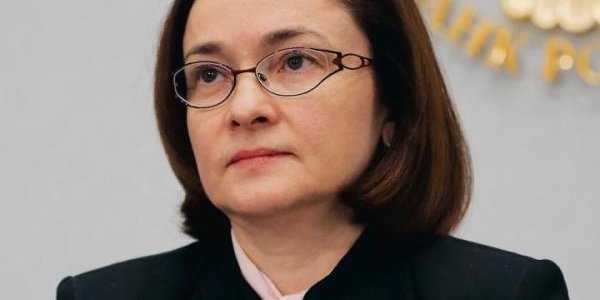
Elvira Nabiullina reappears, cuts interest rates less than expected
Translated from Polish, summarized and contextualized by DistantNews.
At a glance
News
Named sources
New plan
- Elvira Nabiullina, head of the Bank of Russia, reappeared after a month-long absence and announced a reduction in the key interest rate.
- The rate cut to 14.25% from 14.5% surprised analysts and the Kremlin, who expected a larger decrease.
- Nabiullina cited illness as the reason for her absence and warned of inflation risks, including increased government spending and drone attacks on refineries.
After a month away from public view, Elvira Nabiullina, the governor of the Bank of Russia, has resurfaced, announcing a slight reduction in the key interest rate. The move, lowering the rate from 14.5% to 14.25%, marks the ninth consecutive cut since June 2025. However, the magnitude of the reduction surprised many, as most analysts had anticipated a cut to 14%. The Kremlin had also pressured the central bank for a more significant decrease, fearing the Russian economy would "completely freeze."
Nabiullina's month-long absence, during which she missed the St. Petersburg International Economic Forum, fueled widespread speculation about political pressure and a potential resignation. Her reappearance and the seemingly routine decision on interest rates thus became unexpectedly significant, according to economist Yegor Susin. Nabiullina attributed her absence to a simple case of the flu, stating, "I had a cold, I lost my voice."
I had a cold, I lost my voice.
During her address, Nabiullina described the budget and loans as interconnected systems. She explained that increased government spending and a larger budget deficit would compel the central bank to restrict lending, necessitating higher interest rates and a tighter monetary policy. She also highlighted external risks, notably mentioning the Middle East conflict but pointedly omitting Russia's war in Ukraine from her assessment of economic impacts.
Despite the focus on inflation risks, including wages rising faster than productivity and worsening global economic outlooks, Nabiullina also pointed to the impact of Ukrainian drone attacks on oil refineries, which have reduced gasoline and diesel production. The central bank continues to identify a sharp slowdown in domestic demand as the primary deflationary risk, noting that consumption is declining at an accelerating rate.
We think we have every right to expect a reduction in the base rate.
DistantNews Editorial
Originally published by Rzeczpospolita in Polish. Translated, summarized, and contextualized by our editorial team with added local perspective. Read our editorial standards.
More Stories


From Our Blog

What Gets Lost (and Found) When News Is Translated

The Critical Role of Diaspora Media in Global News

What Travellers Should Know About Countries with Restricted Press

A Digital Nomad's Guide to Following Local News

How the Same Story Looks Different in Different Countries
