

 Image: Gobierno de México
Energy Infrastructure Fuels Investment Race in Mexico
Translated from Spanish and summarized by DistantNews. Read the original for the full story.
At a glance
News
Sources not specified
Context piece
- The availability of electricity and natural gas is now a key factor in attracting industrial investment in Mexico, surpassing traditional incentives.
- States are actively enhancing their energy infrastructure; Querétaro is expanding its grid, while Hidalgo is developing new generation capacity.
- Limitations in the electrical infrastructure could restrict the country's productive growth, according to Banamex analysis.
The competition to attract new industrial investments in Mexico is increasingly shifting from fiscal incentives and geographic location to the fundamental availability of energy resources, particularly electricity and natural gas.
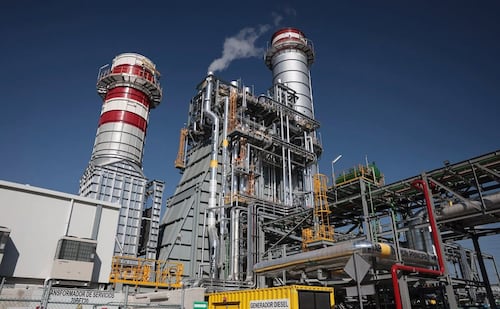
An analysis by Banamex warns that limitations in the country's electrical infrastructure could pose a significant constraint on productive growth. In response, states are strategically bolstering their competitiveness by strengthening their energy capabilities. Querétaro, for example, is focused on expanding and reinforcing its power grid to meet rising demand, while Hidalgo is developing new generation capacity with the Tula II combined cycle plant.
Querétaro already benefits from the El Sauz combined cycle plant, powered by the Naranjos-El Sauz gas pipeline, which has supported the state's industrial expansion since 2014. The state's commitment to energy infrastructure continues, with the CFE recently enabling 91 megawatts for data centers and manufacturers. Additionally, an earlier reinforcement of the El Sauz-San Ildefonso power line increased its capacity by nearly 30%, improving electricity transport to industrial zones.
Despite these efforts, the growing economic activity is straining the electrical grid. Marco del Prete, Querétaro's Secretary of Sustainable Development, acknowledged that voltage fluctuations and intermittencies affect operations. However, he assured that no investment has been lost due to energy shortages, pinpointing distribution as the main challenge. He also noted that some large companies are generating their own electricity using natural gas, leveraging the state's abundant gas supply.
Meanwhile, Hidalgo is pursuing a strategy to gradually replace fuel oil with natural gas. The CFE's construction of the Tula II combined cycle plant, with a capacity of 930 megawatts, is a significant step in this direction, aiming to supply power equivalent to that used by approximately four million households. This dual focus on reinforcing existing infrastructure and developing new generation capacity underscores the critical role of energy in Mexico's industrial future.
About this summary
Originally published by El Universal in Spanish. Translated, summarized, and contextualized automatically by DistantNews, with a note on how the source frames the story. Not individually reviewed before publishing. How this works.
More Stories


From Our Blog

What Press Freedom Means for the News You Read

What Gets Lost (and Found) When News Is Translated

The Critical Role of Diaspora Media in Global News

What Travellers Should Know About Countries with Restricted Press

A Digital Nomad's Guide to Following Local News
