

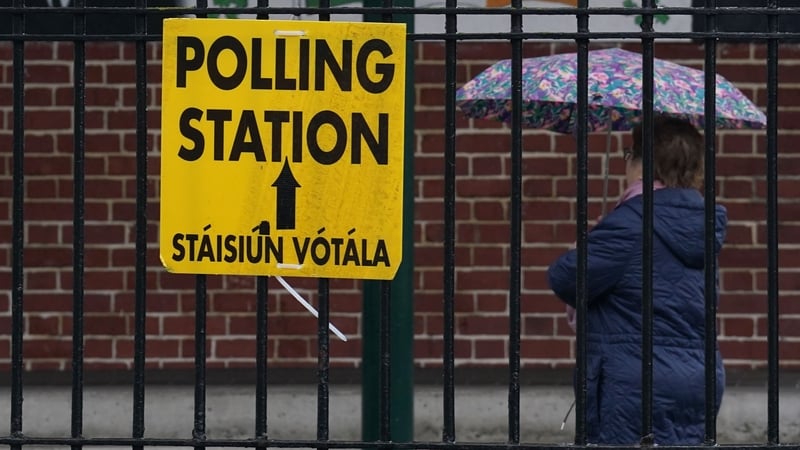

Eoin Daly: Any battle between President Catherine Connolly and the Government will be purely symbolic
Summarized and contextualized by DistantNews.
TLDR
- President Catherine Connolly convened the Council of State to discuss the International Protection Bill, a move that could lead to its referral to the Supreme Court.
- The President has the constitutional power to refer bills to the Supreme Court for an abstract constitutional adjudication before they become law.
- The article argues that while this process can appear as a check on government power, the nature of the Council of State and abstract review limits its potential for genuine contestation.
The Irish Times, through an opinion piece by Eoin Daly, dissects the recent convening of the Council of State by President Catherine Connolly regarding the International Protection Bill. While acknowledging that such actions might be interpreted as the President challenging the Government, Daly suggests this is largely symbolic.
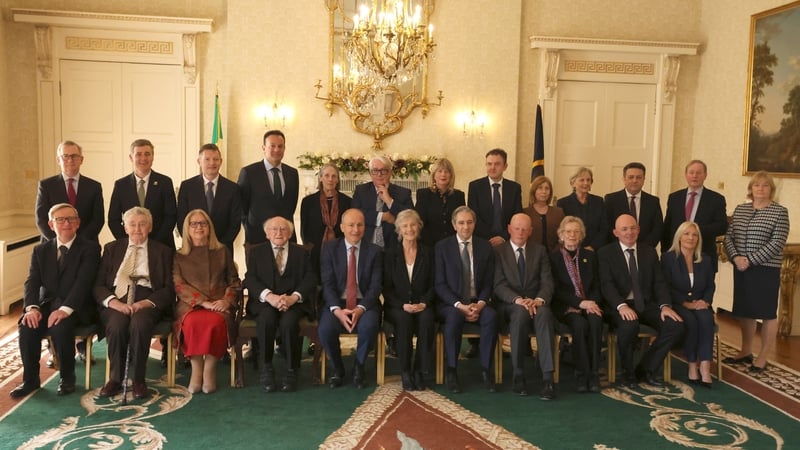
The decision by Catherine Connolly to convene the Council of State on Monday – for the first time since her election – might have looked to some like a signal of her intention to be a thorn in the Government’s side.
The article explains the constitutional mechanism under Article 26, which allows the President to consult the Council of State and potentially refer a Bill to the Supreme Court for an abstract constitutional review. This process, unique to common law traditions, allows for a pre-enactment assessment of a law's constitutionality, distinct from typical court cases involving specific grievances.
Under article 26 of the Constitution, the President has the power to refer a Bill to the Supreme Court for an adjudication on its constitutionality.
Daly argues that the effectiveness of this 'check and balance' is limited. The Council of State, while advisory, does not actively participate in the Supreme Court proceedings, and the President herself does not argue the case. The review is 'abstract' because it lacks factual context or individual impact, focusing solely on the text of the Bill. This detachment, coupled with the President's role as a figurehead in this process, diminishes the potential for genuine political contestation or a robust challenge to government legislation.
Before she does so, however, she must first consult the Council of State.
From an Irish perspective, this analysis is crucial for understanding the nuanced role of the presidency and the constitutional framework. While the public might see the President's actions as a direct confrontation with the Government, the reality, as presented here, is far more procedural and less politically charged. The article suggests that any perceived battles are more about the symbolic assertion of constitutional processes than a substantive challenge to the Government's legislative agenda. It highlights how Ireland's unique constitutional arrangements, influenced by continental European models, differ significantly from other common law jurisdictions.
Article 26 is a very unusual and, indeed, innovative mechanism that is somewhat alien to the “common law” traditions of the English-speaking world.
DistantNews Editorial
Originally published by Irish Times. Summarized and contextualized by our editorial team with added local perspective. Read our editorial standards.
More Stories

From Our Blog

What Gets Lost (and Found) When News Is Translated

The Critical Role of Diaspora Media in Global News

What Travellers Should Know About Countries with Restricted Press

A Digital Nomad's Guide to Following Local News

How the Same Story Looks Different in Different Countries
