

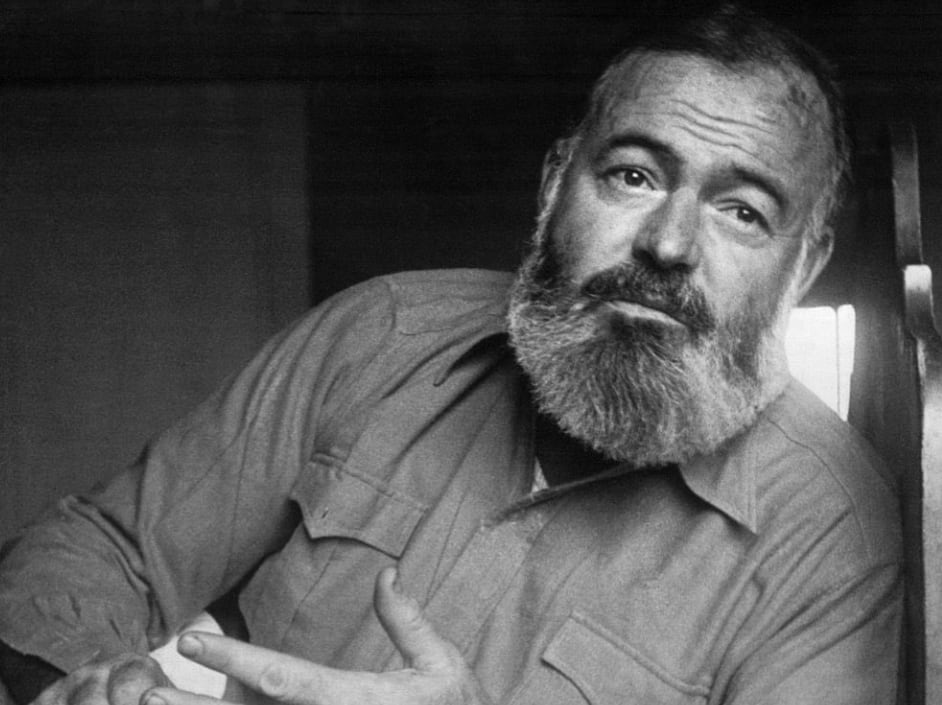
Ernest Hemingway: 'The world breaks everyone, and afterward, many are strong at the broken places'
Translated from Spanish, summarized and contextualized by DistantNews.
At a glance
Analysis
Named sources
Context piece
- Ernest Hemingway's famous quote, "The world breaks everyone, and afterward, many are strong at the broken places," is often misinterpreted.
- The full context reveals a darker, more fatalistic view of trauma and inevitable suffering, not naive optimism.
- Hemingway's reflections, shaped by his World War I experiences, explore the profound impact of conflict on the human psyche and the nature of resilience.
Ernest Hemingway's powerful reflection on resilience, "The world breaks everyone, and afterward, many are strong at the broken places," from his 1929 novel "A Farewell to Arms," continues to resonate today. However, its interpretation is frequently distorted on social media, stripped of its original somber context. Analysts suggest the work doesn't present naive optimism but a brutal truth about trauma.
Researchers have clarified the complete passage to counter the proliferation of misquoted lines online. The full quote warns: "But those that it does not break it kills. It kills the very good, the very gentle, and the very brave impartially. If you are none of these, you can be sure it will kill you too, but there will be no special haste." This stark warning about the inevitability of pain and existential fragility was penned following Hemingway's direct experience in World War I, where he was wounded serving with the Red Cross in Italy.
For Hemingway, war was not merely a backdrop but a transformative force. Author Tobias Wolff, as detailed by The U.S. National Archives, notes that Hemingway's literature delves into "what happens to the soul in war and how people deal with those consequences." This perspective, explored in his Nick Adams stories and novels, significantly influenced Western perceptions of conflict.
Literary critic Gail Caldwell states that Hemingway's prose was revolutionary for its time, rejecting the ornate style of Victorian literature and abstract terms like "glory" or "honor." Hemingway considered such terms obscene when contrasted with the concrete reality of river names and regiment numbers. The genesis of his thought is also rooted in personal experiences, including his wartime injuries and the psychological aftermath he endured.
Hemingway's manuscripts reveal extensive revisions to the novel's conclusion. Paradoxically, the famous phrase was reportedly suggested by F. Scott Fitzgerald after reading a draft, though Hemingway was known to resist external editorial suggestions. The connection to resilience lies in the idea that strength emerges not despite the wound, but from within the wound itself, a concept reminiscent of the Japanese art of Kintsugi, where broken pottery is repaired with gold.
But those that it does not break it kills. It kills the very good, the very gentle, and the very brave impartially. If you are none of these, you can be sure it will kill you too, but there will be no special haste.
DistantNews Editorial
Originally published by La Nación in Spanish. Translated, summarized, and contextualized by our editorial team with added local perspective. Read our editorial standards.
More Stories

From Our Blog

What Gets Lost (and Found) When News Is Translated

The Critical Role of Diaspora Media in Global News

What Travellers Should Know About Countries with Restricted Press

A Digital Nomad's Guide to Following Local News

How the Same Story Looks Different in Different Countries
