


Estonia's Missile Reach Grows as Poland Set to Produce Barracuda 500
Translated from Polish, summarized and contextualized by DistantNews.
At a glance
News
Named sources
New plan
- Estonia's potential to strike deep into Russia with new missile systems poses a growing threat to Russian targets.
- Poland is set to become a production hub for the low-cost Barracuda 500 cruise missile, with an agreement signed with the US firm Anduril Industries.
- The Barracuda 500 has a range of up to 900 km and is designed for mass production, potentially enhancing regional defense capabilities.
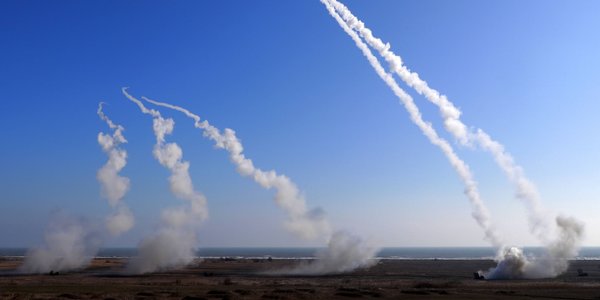
Estonia's military capabilities are evolving, with a renewed focus on its potential to strike deep into Russian territory. This capability, initially warned about in February, involves retaliatory strikes in the event of an attack on Estonia or other Baltic states. Estonian and allied missile systems can currently reach targets up to 290 km inside Russia, a range that is expected to increase.
This strategic development is further bolstered by Poland's agreement to become a production center for the Barracuda 500 cruise missile. A strategic accord signed during the NATO summit in Ankara involves Poland, the United States, Estonia, and Latvia. Under this agreement, Poland will not only produce the missiles for its own defense needs but also for its regional allies, potentially including Estonia and Latvia.
The initiative was further solidified by a cooperation agreement signed in Bydgoszcz between Poland's Armaments Group (PGZ), Military Aviation Works No. 2 (WZL nr 2), and the American company Anduril Industries. This partnership aims to develop low-cost cruise missile production capabilities in Poland, with plans for assembly, production, and operational support of the Barracuda missiles, including a Polish variant, the Barracuda 500.
The Barracuda 500 itself is described as an American-designed, autonomous, and mass-producible cruise missile. Its largest variant boasts a range exceeding 500 nautical miles (approximately 920-926 km) and can carry a warhead of around 45 kg, though heavier payloads may reduce its range. Powered by a turbojet engine, it travels at speeds around 900-920 km/h and is engineered for evasive maneuvers, capable of withstanding up to 5g of force, which aids in evading air defenses.
DistantNews Editorial
Originally published by Rzeczpospolita in Polish. Translated, summarized, and contextualized by our editorial team with added local perspective. Read our editorial standards.
More Stories


From Our Blog

What Gets Lost (and Found) When News Is Translated

The Critical Role of Diaspora Media in Global News

What Travellers Should Know About Countries with Restricted Press

A Digital Nomad's Guide to Following Local News

How the Same Story Looks Different in Different Countries
