

/nginx/o/2026/08/29/17882976t1hcabd.jpg)
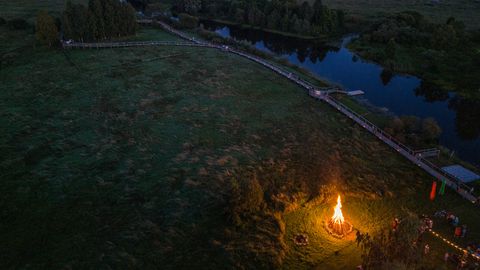
Estonia's 'Night of Ancient Fires' tradition brings communities to the coast
Translated from Estonian and summarized by DistantNews. Read the original for the full story.
At a glance
In-depth
Sources not specified
Context piece
- Estonia is celebrating the 'Night of Ancient Fires' (Muinastulede öö) today, lighting bonfires on its coastlines at sunset.
- Historically, these fires served as navigational aids for sailors returning home from sea.
- The modern tradition brings people together to celebrate the evening, with participants deciding how to mark the occasion.
Estonia is observing the 'Night of Ancient Fires' (Muinastulede öö) today, a tradition where bonfires are lit along the country's coastlines as the sun sets. This event transforms the ancient practice into a modern gathering, drawing communities to the water's edge.
Historically, these coastal fires, known as 'iilastuled,' served a crucial purpose: guiding sailors safely back to shore. For island communities in particular, these beacons were essential for enabling boatmen to find their way home, especially during late hours. According to tradition, those who reached the fire would offer the firekeeper a hundred sprats, ensuring the survival of sailors and the endurance of coastal villages.
Everyone thinks for themselves how to celebrate this evening, it's like Jaanipäev with its bonfires.
Today, the tradition has evolved. While the historical significance is remembered, the 'Night of Ancient Fires' now primarily serves as an occasion for people to come together. Mairold Vaik, the initiator of the tradition, noted that participants are free to celebrate the evening in their own way, comparing the atmosphere to that of Midsummer bonfires.
The event encourages a shared experience, connecting people with the coastline and with each other, carrying forward a practice rooted in maritime history into a contemporary celebration of community.
In ancient times, the coastal fire showed sailors the way home, but now the fire brings people together by the water.
About this summary
Originally published by Postimees in Estonian. Translated, summarized, and contextualized automatically by DistantNews, with a note on how the source frames the story. Not individually reviewed before publishing. How this works.
More Stories

/nginx/o/2026/08/27/17879023t1h8d95.jpg)
/nginx/o/2026/08/27/17880686t1h6a96.jpg)
From Our Blog

What Gets Lost (and Found) When News Is Translated

The Critical Role of Diaspora Media in Global News

What Travellers Should Know About Countries with Restricted Press

A Digital Nomad's Guide to Following Local News

How the Same Story Looks Different in Different Countries
