


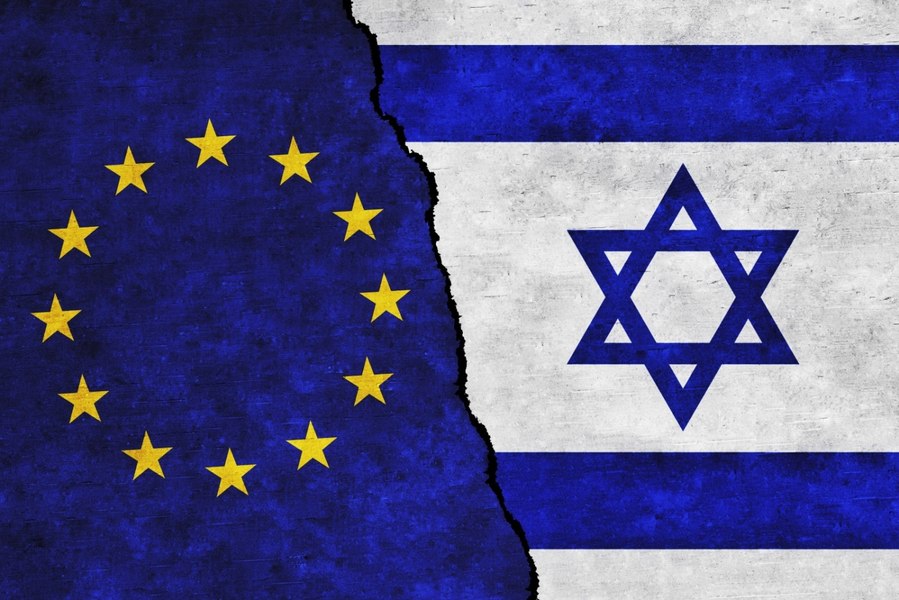
EU foreign ministers may hold crisis meeting on boycotting Israeli settlement goods
Translated from Romanian, summarized and contextualized by DistantNews.
At a glance
News
Named sources
New plan
- EU foreign ministers are likely to hold a crisis meeting to discuss boycotting products from Israeli settlements, with widespread agreement that the situation in the West Bank is intolerable.
- The European Commission has proposed three options: import licensing, exceptional customs duties, or a total ban on products from illegal Israeli settlements.
- Belgium's decision to ban imports from settlements, following Ireland, the Netherlands, and Spain, signals a potential shift, though unanimous EU agreement remains a challenge.
The European Union may soon convene a crisis meeting of foreign ministers to address a potential boycott of products originating from Israeli settlements. Kaja Kallas, the EU's top diplomat, indicated this possibility following a meeting in Brussels, stating that there is broad consensus that the situation in the West Bank is "truly intolerable." The EU and most UN member states consider settlements in the occupied Palestinian territories to be illegal.
everyone agrees that the situation in the West Bank is truly intolerable
Support for measures against these settlements has grown significantly among member states. Representatives are now tasked with taking necessary actions, and a special meeting is probable to define a common EU position. This development follows the circulation of a "restricted" document from European Commission President Ursula von der Leyen, outlining three potential approaches. These include implementing an import licensing system, imposing special tariffs that could effectively exclude settlement products from European markets, or enacting a complete ban on all imports from these illegal Israeli settlements.
The European Commission views these options as pathways to improve the current system of differentiating trade with Israeli settlements. Unlike previous high-level warnings, this issue appears to be gaining momentum. The Belgian federal government recently approved a ban on imports from Israeli settlements in Judea, Samaria, and the Golan Heights. This decision aligns Belgium with Ireland, the Netherlands, and Spain, and was adopted shortly before the parliamentary recess.
taking measures against the settlements has gained the broadest support from the Member States.
Technically, Belgium's decision invokes provisions of the Fourth Geneva Convention, which prohibits an occupying power from transferring its own population into occupied territory or relocating the existing population. The situation could evolve in two ways: either the European decision-making process continues incrementally, requiring unanimous agreement from all member states – a difficult prospect given potential objections – or the signal from Belgium indicates a more rapid shift. The article suggests that if tragedies in Gaza and the West Bank continue, the EU may be compelled to act more decisively.
pathways for improving the current system of differentiating trade with Israeli settlements.
DistantNews Editorial
Originally published by Adevărul in Romanian. Translated, summarized, and contextualized by our editorial team with added local perspective. Read our editorial standards.
More Stories



From Our Blog

What Gets Lost (and Found) When News Is Translated

The Critical Role of Diaspora Media in Global News

What Travellers Should Know About Countries with Restricted Press

A Digital Nomad's Guide to Following Local News

How the Same Story Looks Different in Different Countries
