

EU hits Iran's navy with unprecedented sanctions over Strait of Hormuz blockade
Translated from Romanian, summarized and contextualized by DistantNews.
At a glance
News
From a news agency
New plan
- The EU has imposed unprecedented sanctions on an Iranian Revolutionary Guard Corps (IRGC) naval unit for endangering maritime traffic in the Strait of Hormuz.
- This marks the first time the EU has used its new sanctions mechanism designed to counter restrictions on freedom of navigation.
- The sanctions target the IRGC's Hormozgan provincial command and two Iranian citizens involved in disrupting maritime traffic.
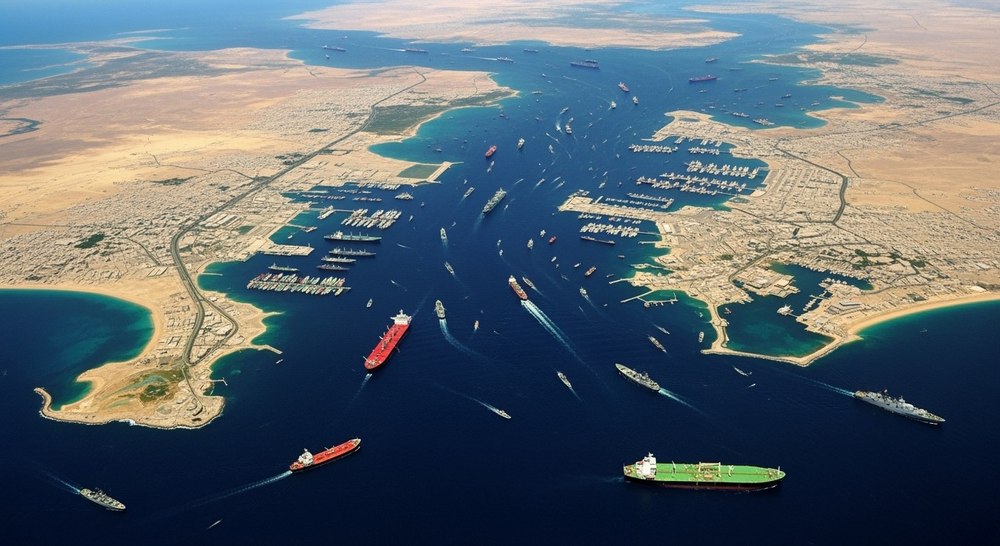
The European Union has decided to impose sanctions against a unit of the Islamic Revolutionary Guard Corps (IRGC), accused of endangering freedom of navigation in the Strait of Hormuz, a strategic route through which approximately one-fifth of the world's oil transits.
The decision, which also targets two Iranian citizens, marks a first for the EU bloc. It is the first time Brussels has utilized the new sanctions mechanism created specifically to respond to the restriction of navigation freedom, according to the Times of Israel. The Hormozgan provincial command of the IRGC navy has been placed on the sanctions list, along with Mohammad Akbarzadeh, deputy commander for political affairs of the naval forces, and Hamid Hosseini, representative of Iran's Oil, Gas, and Petrochemical Products Exporters Union, according to an EU statement.
Iran's actions are unacceptable.
"Iran's actions are unacceptable." These measures come amid heightened regional tensions, following Iran's attempts to close the Strait of Hormuz in response to attacks launched by the United States and Israel on Iranian territory at the end of February. Kaja Kallas, the EU's foreign policy chief, condemned Tehran's actions, stating that "Iran's actions are unacceptable," and that member states had decided to sanction the individuals and entities involved in disrupting maritime traffic.
"This is the first time the EU is applying its new regime on freedom of navigation, and if necessary, we will apply it again," Kallas emphasized. The situation in the Strait of Hormuz remains sensitive, given the strategic importance of this route for global energy trade and its direct impact on international markets. The EU's move signals a firm stance against actions that threaten international maritime security and trade flows through this critical chokepoint.
This is the first time the EU is applying its new regime on freedom of navigation, and if necessary, we will apply it again.
DistantNews Editorial
Originally published by Adevărul in Romanian. Translated, summarized, and contextualized by our editorial team with added local perspective. Read our editorial standards.
More Stories
From Our Blog

What Gets Lost (and Found) When News Is Translated

The Critical Role of Diaspora Media in Global News

What Travellers Should Know About Countries with Restricted Press

A Digital Nomad's Guide to Following Local News

How the Same Story Looks Different in Different Countries
