

EU legal advisor opens door for controversial Italian migrant centers in Albania
Translated from Dutch, summarized and contextualized by DistantNews.
TLDR
- An EU legal advisor has opened the door to controversial Italian migrant reception centers in Albania.
- The centers are intended to process asylum seekers rescued at sea by Italian vessels.
- This move follows an agreement between Italy and Albania to manage migration flows.
The European Union's legal advisor has signaled a potential green light for Italy's controversial plan to establish migrant reception centers in Albania. This development, reported by De Volkskrant, suggests that the EU's legal framework may not present insurmountable obstacles to the agreement between Rome and Tirana.
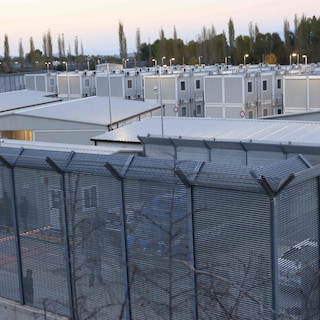
The proposed centers aim to process asylum seekers rescued in international waters by Italian ships. Under the plan, these individuals would be transferred to Albania, where their asylum claims would be evaluated. Those whose claims are rejected could be deported directly from Albania, bypassing Italian territory.
This agreement has been met with criticism from human rights organizations, who argue that it could violate international and EU law by outsourcing asylum processing and potentially exposing vulnerable individuals to unsafe conditions. However, the Italian government, led by Prime Minister Giorgia Meloni, has defended the plan as a necessary measure to control irregular migration and alleviate pressure on Italy's reception system.
The EU legal advisor's opinion, while not binding, is significant. It indicates that the plan might be legally feasible within the existing European legal architecture, despite the ethical and humanitarian concerns raised. This could pave the way for the centers to become operational, marking a new and potentially precedent-setting approach to managing migration in the Mediterranean region.
DistantNews Editorial
Originally published by De Volkskrant in Dutch. Translated, summarized, and contextualized by our editorial team with added local perspective. Read our editorial standards.
More Stories
:format(jpeg):fill(f8f8f8,true)/s3/static.nrc.nl/taxonomy/e5c3f19-03182026_Cocai%25CC%2588nekoorts_Artikel-%2520en%2520itemafbeelding_1280x768px.png)
/s3/static.nrc.nl/images/gn4/stripped/data147188829-5cee72.jpg)
/s3/static.nrc.nl/wp-content/uploads/2026/04/20172544/200426VER_2033162636_pavel-1.jpg)
From Our Blog

What Gets Lost (and Found) When News Is Translated

The Critical Role of Diaspora Media in Global News

What Travellers Should Know About Countries with Restricted Press

A Digital Nomad's Guide to Following Local News

How the Same Story Looks Different in Different Countries
