

/nginx/o/2026/08/18/17854880t1h388d.jpg)
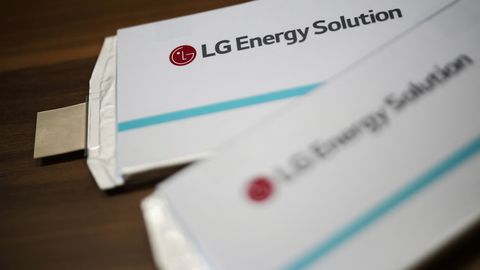
EU's 1.5 Billion Euro Battery Fund Sparks Fierce Competition Amid Industry Challenges
Translated from Estonian, summarized and contextualized by DistantNews.
At a glance
News
Named sources
New plan
- The European battery industry faces challenges from slowing EV sales, price pressure from Asian manufacturers, and high energy costs.
- LG Energy Solution in Poland is shifting focus to energy storage systems alongside EV batteries due to slower-than-expected demand.
- The EU is launching a 1.5 billion euro interest-free loan fund, but competition and support limitations will shape the industry's future.
Europe's battery industry is navigating a complex landscape marked by decelerating electric vehicle (EV) sales, intense price competition from Asian producers, and elevated energy expenses. This challenging environment is compelling manufacturers to reassess their strategies and production plans.
After several years of very rapid growth, the market is now consolidating. Poland remains one of Europe's main battery centers, primarily thanks to our operations.
LG Energy Solution's facility in Wrocław, Poland, a major hub for lithium-ion battery production in Europe, is adapting to these market shifts. While continuing to produce EV batteries, the company is increasingly focusing on large-scale energy storage systems (BESS). This pivot is a response to the slower-than-anticipated growth in demand for EV batteries, as reported by Polish media outlet XYZ.
"After several years of very rapid growth, the market is now consolidating. Poland remains one of Europe's main battery centers, primarily thanks to our operations," stated Yong Girl Lee, director of LG Energy Solution Wrocław. He highlighted the multi-faceted issues facing the sector: sluggish EV sales in Europe, price pressure from Asian competitors, and the high cost of energy in Europe making production expensive.
The energy storage segment is growing very rapidly and is becoming a new growth engine both in Poland and throughout the European Union.
Despite these hurdles, LG Energy Solution sees significant potential in the energy storage segment. BESS, which utilizes batteries for storing renewable energy and balancing power grids, is experiencing rapid growth and is becoming a new engine for expansion in both Poland and the broader European Union. Lee emphasized the need for greater public support from the EU to ensure the industry's success and prevent a regression of battery production back to Asia.
Europe's battery industry has made significant progress, but it has now reached a critical point. Now is the time to help companies achieve business success.
LG Energy Solution advocates for direct financial incentives, such as tax breaks for using European-made components, and suggests the use of price difference agreements for projects employing European batteries. This, they argue, would enhance the competitiveness of local batteries against cheaper Asian imports. Lee warned that without swift EU support, Europe risks losing control over a critical sector vital for the energy transition and the development of electric mobility.
Without swift EU support, Europe risks losing control over one of the most important sectors that supports the development of energy transition and electric mobility.
DistantNews Editorial
Originally published by Postimees in Estonian. Translated, summarized, and contextualized by our editorial team with added local perspective. Read our editorial standards.
More Stories
From Our Blog

What Gets Lost (and Found) When News Is Translated

The Critical Role of Diaspora Media in Global News

What Travellers Should Know About Countries with Restricted Press

A Digital Nomad's Guide to Following Local News

How the Same Story Looks Different in Different Countries
