

/nginx/o/2026/07/01/17753221t1h881f.jpg)
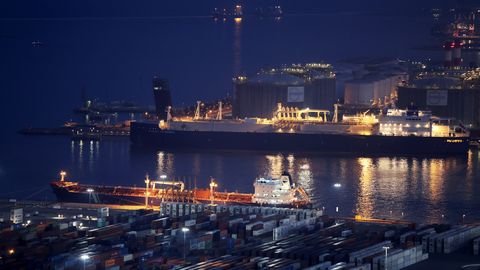
EU's Russian gas imports rise despite decoupling efforts
Translated from Estonian, summarized and contextualized by DistantNews.
At a glance
News
Sources not specified
Context piece
- Russian natural gas imports to the EU have increased in the first months of 2026, despite official efforts to reduce reliance on Russian energy.
- Experts explain that these figures do not indicate a failure of sanctions, suggesting a more complex situation behind the apparent contradiction.
- The EU aims to phase out Russian liquefied natural gas, but recent statistics show a rise in imports, prompting scrutiny of the energy market dynamics.
Despite the European Union's stated goal of phasing out Russian liquefied natural gas, imports have reportedly increased in the first months of 2026. This trend appears contradictory to the bloc's "historical weaning" from Russian energy sources.
Energy experts, however, caution against interpreting these numbers as a sign of sanctions failing. They suggest that the situation is more nuanced and that the increase in imports does not necessarily equate to a circumvention of restrictions.
The data highlights the complex realities of the European energy market, where official policy and market dynamics can sometimes diverge. Further analysis is needed to understand the specific factors driving this apparent contradiction and its implications for the EU's energy strategy.
DistantNews Editorial
Originally published by Postimees in Estonian. Translated, summarized, and contextualized by our editorial team with added local perspective. Read our editorial standards.
More Stories

/nginx/o/2026/06/30/17749740t1ha1ae.jpg)
From Our Blog

What Gets Lost (and Found) When News Is Translated

The Critical Role of Diaspora Media in Global News

What Travellers Should Know About Countries with Restricted Press

A Digital Nomad's Guide to Following Local News

How the Same Story Looks Different in Different Countries
