

EU tells Serbia: Choose Europe, Russia, or China for EU path
Translated from Croatian, summarized and contextualized by DistantNews.
At a glance
News
From a news agency
Context piece
- EU leaders confirmed their commitment to the bloc's enlargement process at a summit with Western Balkan nations.
- Serbia was told its EU membership progress depends on reforms and aligning its foreign policy with the EU, requiring a choice between Europe, Russia, and China.
- Montenegro was highlighted as a leading candidate for EU membership, aiming to join by 2028.
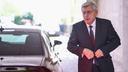
European leaders delivered a clear message to Serbia at a summit in Tivat, Montenegro, stating that its path to EU membership hinges on reforms and aligning its foreign policy with the bloc. The message, delivered by EU officials, emphasized that Serbia must choose between aligning with Europe, Russia, or China, as "it is not possible to pursue a policy of wavering between Russia, China, and Europe."
Serbia must clearly decide where it sees its future. It is not possible to pursue a policy of wavering between Russia, China, and Europe.
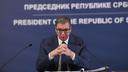
European leaders reaffirmed their commitment to the EU enlargement process during the summit, which concluded without a joint statement. Montenegro was singled out as the leading candidate, with aspirations to become the 28th member state by 2028. Serbia, however, was urged to reform and align its foreign and security policy with that of the European Union. Serbian President Aleksandar Vučić acknowledged that several countries pressed for Serbia to impose sanctions against Russia over the war in Ukraine, which Serbia has not yet done.
That is what they asked of us.
European Commission President Ursula von der Leyen outlined clear rules for Serbia to open new negotiation chapters, focusing on reforms in the rule of law, media freedom, and electoral legislation, alongside foreign and security policy alignment. European Council President Antonio Costa noted that Serbian authorities had committed to a specific timeline, with the European Commission to prepare an assessment for the EU Council's decision on opening further negotiations.
We fully support this. This will change the dynamics and energy of the EU accession process. This means that when you achieve something, you can sit at the table.
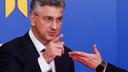
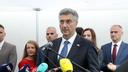
Croatian Prime Minister Andrej Plenković also met with his Montenegrin counterpart, Milojko Spajić, on the sidelines of the summit. Plenković expressed optimism about Montenegro's willingness to address issues raised by Croatia, including compensation for former camp detainees, the search for missing persons from the Croatian War of Independence, and the prosecution of war crimes. Croatia also seeks a resolution for property disputes involving Croatian families who lost property in Montenegro.
Serbia has very clear rules for opening a new, third set of negotiation chapters. These are reforms in the areas of the rule of law, media freedom, and electoral legislation, and this must also be aligned with the EU's common foreign and security policy.
DistantNews Editorial
Originally published by Večernji List in Croatian. Translated, summarized, and contextualized by our editorial team with added local perspective. Read our editorial standards.
More Stories
From Our Blog

What Gets Lost (and Found) When News Is Translated

The Critical Role of Diaspora Media in Global News

What Travellers Should Know About Countries with Restricted Press

A Digital Nomad's Guide to Following Local News

How the Same Story Looks Different in Different Countries
