


Euro Zone Factory Growth Hits More Than Four-Year High in August, PMI Shows
Translated from English and summarized by DistantNews. Read the original for the full story.
At a glance
Newswire
Documents & data
Context piece
- The euro zone’s manufacturing PMI rose to 52.7 in August from 51.9 in July, its highest level since May 2022.
- New orders recorded their strongest growth since early 2022, while factory output reached a 54-month high and employment stabilised.
- Germany and France expanded, but Italy and Spain contracted as inflation and energy costs continued to concern policymakers.
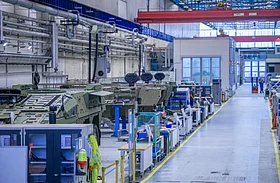
The euro zone’s factories recorded their strongest growth in more than four years in August, with new orders providing the clearest sign yet of a broader industrial recovery. S&P Global’s manufacturing Purchasing Managers’ Index rose to 52.7 from 51.9 in July, just below the preliminary reading of 52.8.
New orders increased at their fastest pace since early 2022. Export orders rose for only the second time in four and a half years, with Austria, Germany and the Netherlands reporting particularly strong overseas sales. Factory output also accelerated, lifting its sub-index to 53.3, the highest level in 54 months.
Chemicals, metals and electronic components drove much of the production increase. Germany posted its strongest factory growth in more than four years, while France also supported the region-wide expansion. Italy recorded its first contraction since January, and Spain remained in negative territory.
The August PMI report provided the clearest signs yet that the euro zone's industrial economy has so far shaken off both the oil price shock and supply-related disruptions caused by the Middle East war. Stronger order book growth, in part owing to a recovery in export demand, should give this expansion legs.
Employment was broadly unchanged, ending more than three years of consecutive monthly declines. Business confidence improved for a fourth straight month, and manufacturers’ optimism about the next 12 months rose above its long-term average.
Price pressures eased but remained high. Input-cost inflation fell to a six-month low, while output-price inflation followed a similar trend. Joe Hayes of S&P Global Market Intelligence said stronger order books and recovering export demand could support the expansion, but warned that disinflation was beginning to level off. Official data was expected to show inflation rising to 3.3% in August from 2.9%, while a Reuters poll indicated the European Central Bank could raise interest rates again before holding policy unchanged through at least mid-2027.
A further softening of producer price increases, even in the midst of sustained oil market volatility, helps to alleviate broader inflation worries. That said, the pace of disinflation is starting to level off and the PMI's price metrics remain well above their pre-war levels, which may just embolden a cautious stance by euro zone monetary policymakers.
About this summary
Originally published by Khaleej Times in English. Translated, summarized, and contextualized automatically by DistantNews, with a note on how the source frames the story. Not individually reviewed before publishing. How this works.
More Stories


From Our Blog

What Gets Lost (and Found) When News Is Translated

The Critical Role of Diaspora Media in Global News

What Travellers Should Know About Countries with Restricted Press

A Digital Nomad's Guide to Following Local News

How the Same Story Looks Different in Different Countries
