


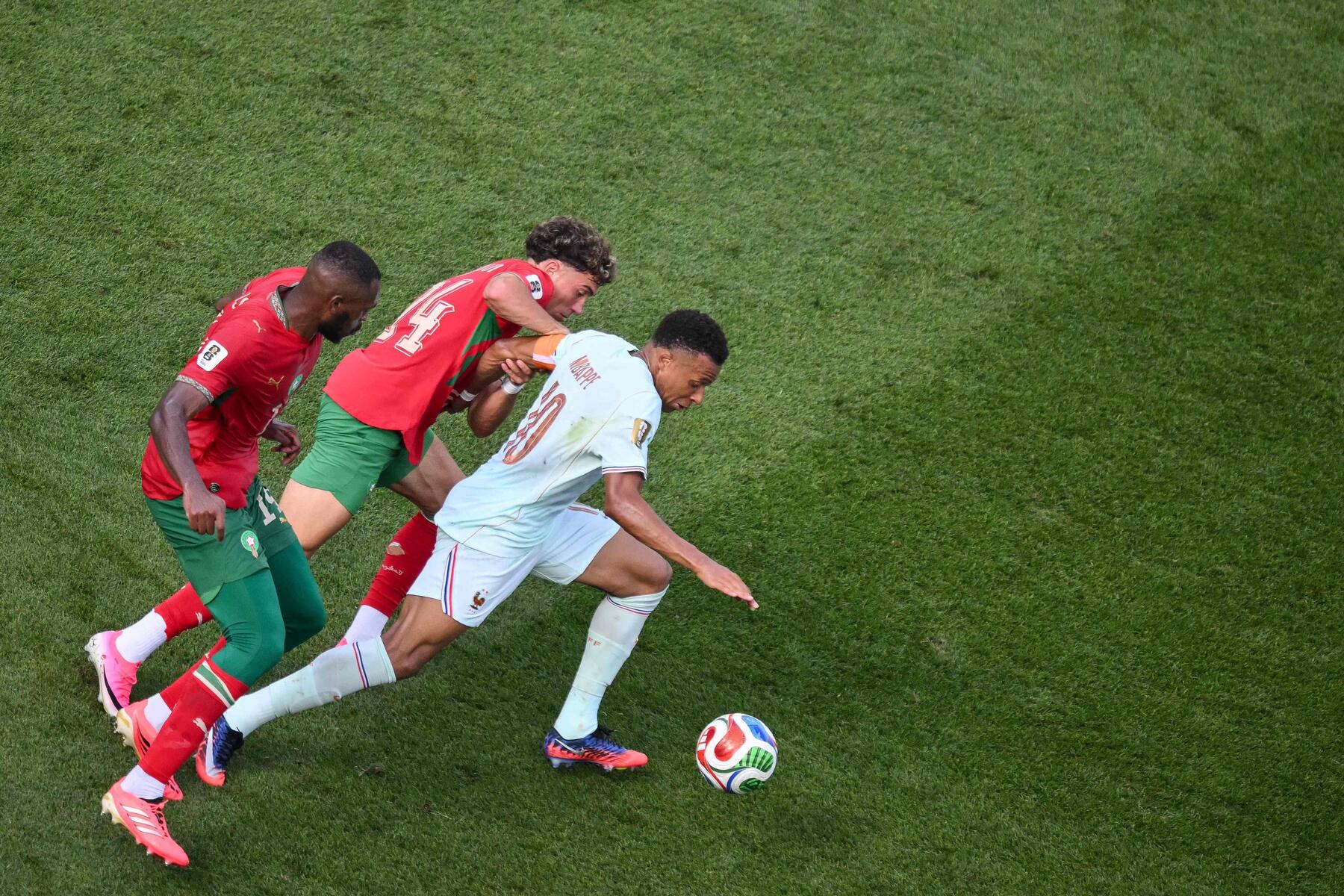
Europe increasingly plays against itself at the World Cup
Translated from German, summarized and contextualized by DistantNews.
At a glance
Analysis
Sources not specified
Context piece
- The expanded 48-team World Cup, lasting 39 days, has drawn criticism for its length and impact on players.
- Despite increased participation, the tournament's latter stages show familiar power dynamics, with Europe and South America expected to produce the winner.
- Africa's initial success in the group stage faded in the knockout rounds, with only Morocco and Egypt advancing past the round of 32, while Concacaf nations, particularly the hosts, showed strong performance.
The expanded 48-team World Cup, now in its 39th day, is facing scrutiny over its extended duration and the increased burden on players. This year's tournament is eleven days longer than the 2022 Qatar World Cup, concluding on July 19 in New Jersey. FIFA President Gianni Infantino championed the expansion in 2017, promising to bring the World Cup into the 21st century and offer more nations a chance to dream. However, the extended schedule, featuring eight matches en route to the title, has led to questions about its true benefits.
While the larger format allows teams like Jordan, Curaçao, Uzbekistan, and Cape Verde to debut on the world stage, the fundamental power structures in global football appear unchanged. The article suggests that the winner will likely emerge from Europe or South America, as has historically been the case. Africa's initial strong showing in the group stage, with nine out of ten teams advancing, proved to be a temporary surge. Only Morocco and Egypt managed to progress beyond the round of 32, highlighting a swift return to reality in the knockout phase.
In contrast, the Concacaf region, comprising North, Central America, and the Caribbean, emerged as a significant winner. With three representatives reaching the last 16, this marks a notable improvement compared to previous tournaments. The home advantage for the USA, Mexico, and Canada is cited as a contributing factor to their success. The article implies that despite the increased number of matches and potential for new narratives, the World Cup's core competitive landscape remains largely consistent, with established footballing powers dominating the later stages.
DistantNews Editorial
Originally published by Die Presse in German. Translated, summarized, and contextualized by our editorial team with added local perspective. Read our editorial standards.
More Stories

From Our Blog

What Gets Lost (and Found) When News Is Translated

The Critical Role of Diaspora Media in Global News

What Travellers Should Know About Countries with Restricted Press

A Digital Nomad's Guide to Following Local News

How the Same Story Looks Different in Different Countries
