


Europe's Team: Individual Stars Aren't Enough
Translated from German, summarized and contextualized by DistantNews.
At a glance
Analysis
Sources not specified
Context piece
- Europe faces ongoing crises and needs strong teamwork to compete globally, akin to a soccer team.
- Key figures like António Costa, Roberta Metsola, Ursula von der Leyen, and Christine Lagarde are central to potential leadership shifts.
- Strategic personnel changes, possibly involving Emmanuel Macron and German leadership, could reshape the EU's top positions by 2027.
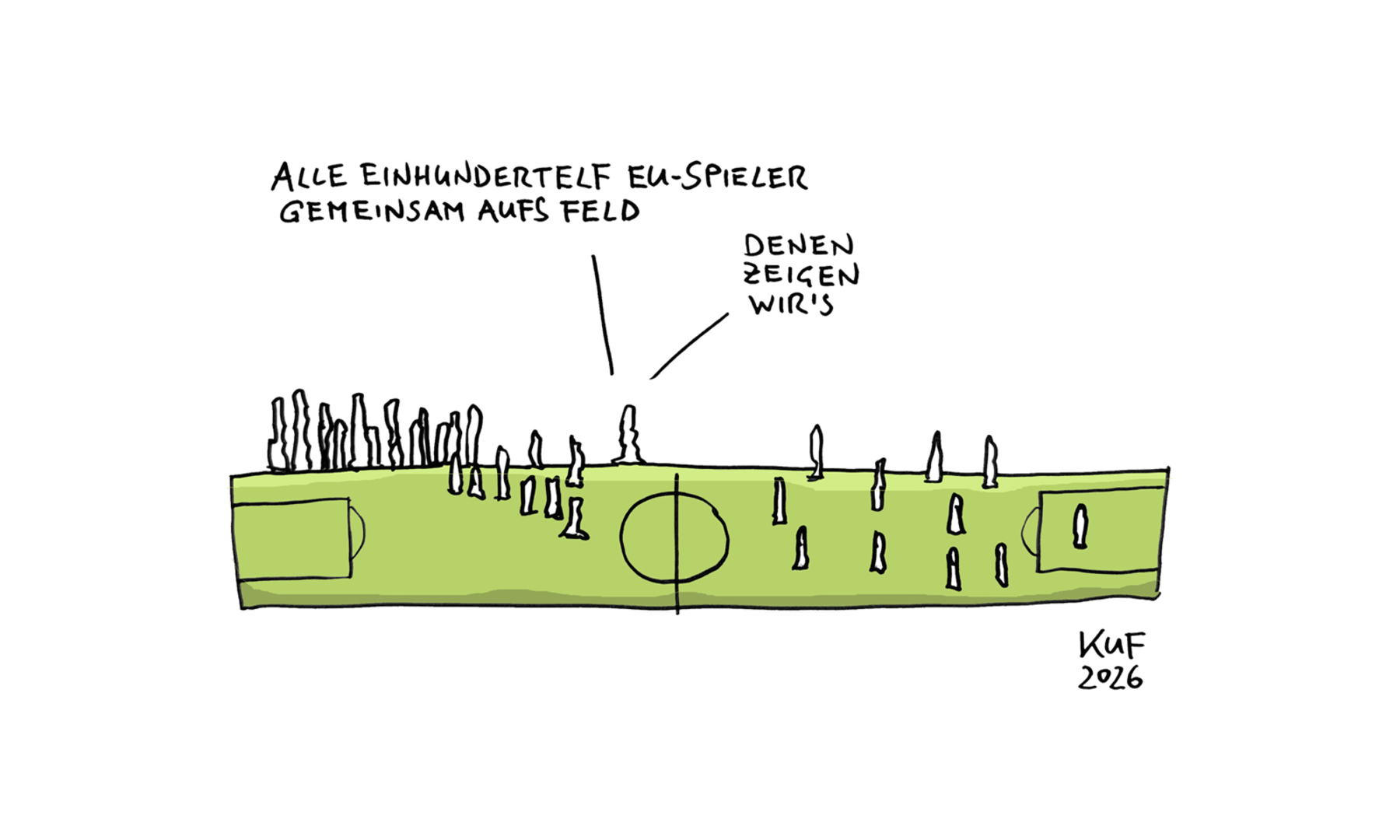
Europe has been in crisis mode for years, attempting to tackle major challenges as a unified team. However, the best individual players are insufficient for global competition; teamwork is paramount, much like in national soccer teams vying for a championship.
Some European leaders have long-standing roles, adaptable to various positions, while others remain on the sidelines, only occasionally entering the field. To succeed on the international stage, Europe requires its optimal lineup, a drive towards its goals, and significant creativity to counter those who disregard international rules.
The article speculates on the composition of a future "Team Europe," emphasizing balance and impact. European Council President António Costa, a Social Democrat and de facto captain, is nearing the end of his term in mid-2027 but may seek an extension. Roberta Metsola, the conservative EU Parliament President and a seasoned player in the midfield, could be nominated for a third term starting in early 2027.
Commission President Ursula von der Leyen, an EPP Christian Democrat positioned as a central striker, and liberal ECB President Christine Lagarde, the Euro's goalkeeper, hail from Germany and France, countries with significant influence over the European lineup. Lagarde's term also ends soon, while von der Leyen is expected to serve until late 2029. Meanwhile, liberal French President Emmanuel Macron is approaching the end of his second and final term. With rising nationalism in France, he might consider a move to the European level, potentially seeking the EU Commission presidency. This would necessitate a significant reshuffle in the front midfield, possibly prompting von der Leyen to consider the German presidency, which is renewed in early 2027.
Such a realignment could allow Berlin to place its candidate as the European Central Bank president for the first time. Current Bundesbank President Joachim Nagel, a Social Democrat, is a potential candidate. This scenario might put liberal EU foreign policy chief Kaja Kallas's position at risk due to the need for party-political parity in European appointments. The realism of these tactical shifts remains to be seen, but amidst the maneuvering, the focus should remain on serving Europe's 450 million citizens.
DistantNews Editorial
Originally published by Die Presse in German. Translated, summarized, and contextualized by our editorial team with added local perspective. Read our editorial standards.
More Stories


From Our Blog

What Gets Lost (and Found) When News Is Translated

The Critical Role of Diaspora Media in Global News

What Travellers Should Know About Countries with Restricted Press

A Digital Nomad's Guide to Following Local News

How the Same Story Looks Different in Different Countries
