


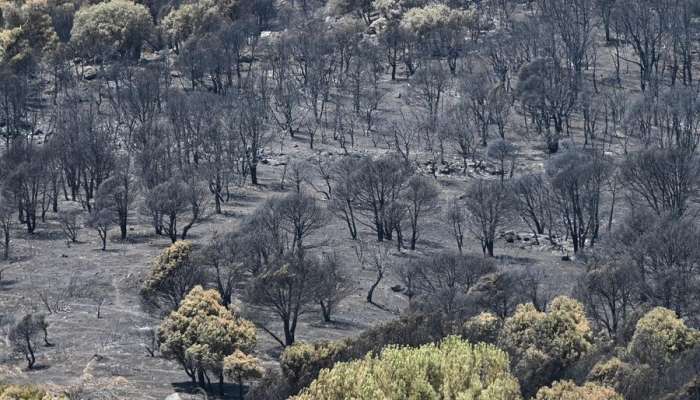
Europe Wildfires Burn Over 434,000 Hectares This Year, UNECE Reports
Translated from English, summarized and contextualized by DistantNews.
At a glance
News
Official statement
Ongoing story
- Over 434,000 hectares have burned across Europe this year, with Spain exceeding its historical annual average.
- The United States has recorded approximately 1.85 million hectares burned, while Canada has seen over 3.77 million hectares consumed by wildfires.
- The UNECE emphasizes that wildfire is a predictable consequence of climate change and stresses the importance of prevention and sustainable forest management.
Europe has already seen more than 434,000 hectares consumed by wildfires this year, according to the United Nations Economic Commission for Europe (UNECE). Devastating fires in France's Gironde region alone destroyed about 42,000 hectares of pine forest, forcing tens of thousands to evacuate. Spain is experiencing one of its worst wildfire seasons in decades, with over 200,000 hectares burned, twice its historical annual average.
The wildfire crisis is now shifting eastward, with Greece and Italy bracing for increased danger as heatwaves, drought, and strong winds are expected to continue into early August, the European Union warned. The situation is equally alarming across the Atlantic. The United States has recorded approximately 1.85 million hectares burned so far in 2026, while Canada has battled over 4,000 wildfires that have scorched 3.77 million hectares, with dozens of large fires still uncontrolled.
"Every summer reminds us that wildfire is no longer an exceptional event but an increasingly predictable consequence of a warming climate," said Paola Deda, director of the UNECE Environment and Forests Division. "While emergency response remains essential, our greatest opportunity lies in prevention, sustainable forest management and building more resilient landscapes and communities."
The UNECE highlighted that wildfires threaten lives, destroy homes and infrastructure, and force evacuations, with impacts extending far beyond the fire perimeter through smoke pollution. Climate change exacerbates wildfire frequency and intensity, creating a dangerous feedback loop where massive carbon emissions from fires further accelerate global warming. The economic consequences are substantial, with EU wildfires estimated to cost around 2.5 billion euros annually through damage, lost tourism, and economic disruption.
The UN organization stressed that approximately nine out of ten wildfires are caused by human activity. Therefore, prevention through public awareness, regulations, and sustainable forest management, including risk assessment, early detection, and post-fire restoration, is crucial for reducing fire risk.
Every summer reminds us that wildfire is no longer an exceptional event but an increasingly predictable consequence of a warming climate. While emergency response remains essential, our greatest opportunity lies in prevention, sustainable forest management and building more resilient landscapes and communities.
DistantNews Editorial
Originally published by Times of Oman in English. Translated, summarized, and contextualized by our editorial team with added local perspective. Read our editorial standards.
More Stories

From Our Blog

What Gets Lost (and Found) When News Is Translated

The Critical Role of Diaspora Media in Global News

What Travellers Should Know About Countries with Restricted Press

A Digital Nomad's Guide to Following Local News

How the Same Story Looks Different in Different Countries
