


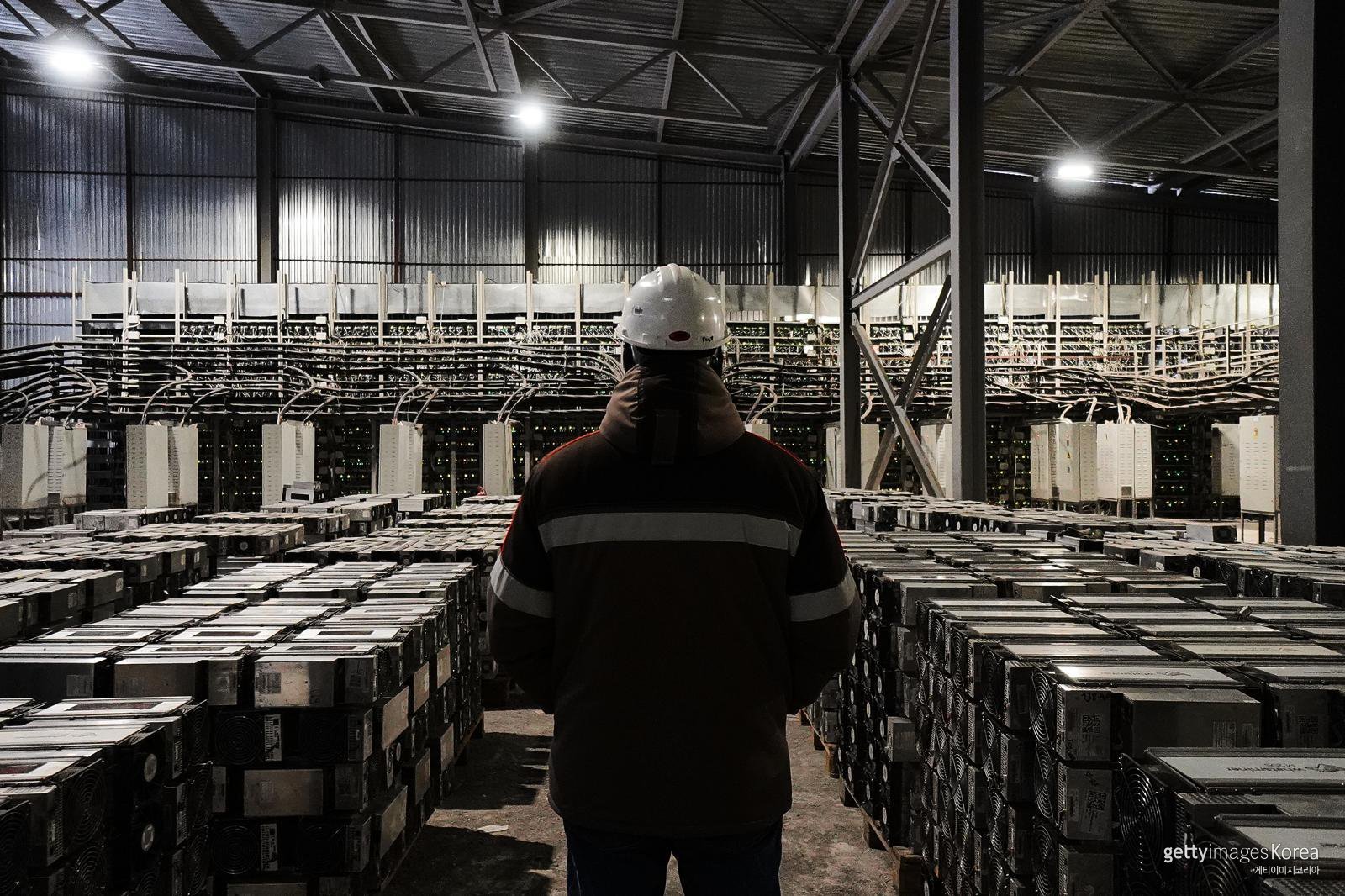
“Even 4-Cent Electricity Leaves Nothing”: Why Bitcoin Miners Are Turning to AI
Translated from Korean and summarized by DistantNews. Read the original for the full story.
At a glance
Analysis
Named sources
Ongoing story
- Bitcoin mining profitability has fallen to near-record lows, with electricity prices and equipment efficiency creating a sharp divide among operators.
- Older machines can struggle to break even even with electricity costing 4 cents per kilowatt-hour, while newer equipment can remain viable at rates as high as 10.1 cents.
- Mining companies have announced more than $70 billion in AI and HPC contracts, but the value of contracts that have begun generating revenue remains undisclosed.
Bitcoin miners are facing a brutal calculation: even electricity costing 4 cents per kilowatt-hour may not leave operators using older equipment with any meaningful margin. As profitability drops, some companies are considering turning their power supplies and sites over to artificial intelligence and high-performance computing instead.
The dividing line is clear. With a hashprice of about $30, older machines using 25 to 38 joules per terahash reach their electricity-cost break-even point at 3.9 cents per kilowatt-hour. Machines using 19 to 25 joules per terahash break even at 5.6 cents, while widely used equipment with efficiency of 14 to 19 joules per terahash can withstand rates up to 7.4 cents. The newest machines, operating below 14 joules per terahash, can reach a break-even electricity price of 10.1 cents.
Those calculations exclude hosting, labor and depreciation, meaning actual profitability can be lower. BitPlanet Research Lab said the industry is not experiencing a uniform downturn. Instead, it described a period of polarization shaped by electricity costs and hardware efficiency. Companies operating older machines or paying more than 6 to 7 cents per kilowatt-hour are actively reviewing AI and HPC conversions, while miners with cheap power and efficient equipment can still make money from Bitcoin mining.
The current situation is more accurately understood as a period of polarization among mining companies based on electricity prices and equipment efficiency, rather than a uniform downturn across the mining industry.
The appeal of AI and HPC is already reflected in company valuations. CoinShares counted more than $70 billion in announced AI and HPC contracts from listed mining companies through the first quarter of the year. Yet the figure represents announced contract value, including deals announced in 2025, not realized revenue. Most projects require new data centers, leaving room for cancellations and construction delays. CoinShares estimated infrastructure costs at $700,000 to $1 million per megawatt for mining, compared with $8 million to $15 million for AI infrastructure.
Hashprice rebounded 20.4% in four days, from $31.80 on Aug. 18 to $38.29 on Aug. 22, and reached $39.36 on Aug. 31. But the 30-day average remained at $34.63, below last year’s low monthly average of $37.89. BitPlanet said a recovery would require hashprice to stay above that level for more than two months, alongside rising mining difficulty. The forward six-month average stood at $37.59 on Aug. 31, still slightly below the benchmark.
Whether the AI and HPC conversion leads to actual profitability improvements is still being validated.
About this summary
Originally published by Dong-A Ilbo in Korean. Translated, summarized, and contextualized automatically by DistantNews, with a note on how the source frames the story. Not individually reviewed before publishing. How this works.
More Stories



From Our Blog

What Gets Lost (and Found) When News Is Translated

The Critical Role of Diaspora Media in Global News

What Travellers Should Know About Countries with Restricted Press

A Digital Nomad's Guide to Following Local News

How the Same Story Looks Different in Different Countries
