

Ex-Attorney General Valadés slams judicial reform extending magistrate terms as unconstitutional
Translated from Spanish, summarized and contextualized by DistantNews.
At a glance
News
Sources not specified
Context piece
- Former Attorney General Diego Valadés criticizes the judicial reform extending the term of TEPJF magistrates as unconstitutional.
- Valadés argues the extension contradicts the Mexican Constitution and is undemocratic.
- He believes the decision will eventually need to be corrected, despite avoiding speculation on political motivations.
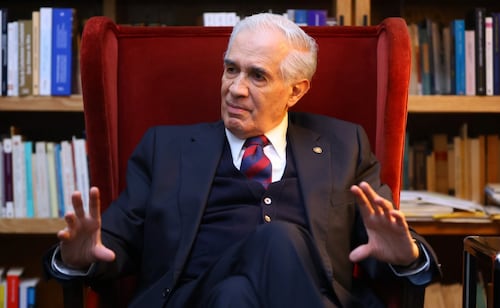
Former Attorney General Diego Valadés has strongly criticized a judicial reform that extends the terms of current magistrates at the Superior Chamber of the Superior Electoral Tribunal of the Federal Judiciary (TEPJF). Valadés, also a researcher at the National Autonomous University of Mexico's Institute of Legal Research, stated the reform is unconstitutional and does not reflect a democratic state.
It is really incomprehensible within the Mexican constitutional system to make this type of extension when the Constitution was very clear regarding the established limits.
Speaking at a commemorative event for Manuel Camacho Solís at the Senate, Valadés questioned the extension of the electoral magistrates' period, deeming it a contradiction to the Mexican Constitution's clear limits. He noted that even within the majority political party, there are disagreements over this decision.
I believe that at some point what is clearly an anti-democratic decision will have to be corrected.
"I believe that at some point what is clearly an anti-democratic decision will have to be corrected," Valadés asserted. When asked if the mandate extension could be seen as a quid pro quo for favorable rulings by the Electoral Tribunal that aided Morena and its allies in achieving a legislative majority, Valadés declined to speculate on political motivations.
That would already be a very subjective pronouncement.
"That would already be a very subjective pronouncement," he responded. Nevertheless, Valadés insisted that, regardless of political interpretations, the decision is incompatible with the principles of a democratic state and the rule of law. "The objective fact is that this is a decision that does not correspond to a democratic state and a state of law," he concluded.
The objective fact is that this is a decision that does not correspond to a democratic state and a state of law.
DistantNews Editorial
Originally published by El Universal in Spanish. Translated, summarized, and contextualized by our editorial team with added local perspective. Read our editorial standards.
More Stories
From Our Blog

What Press Freedom Means for the News You Read

What Gets Lost (and Found) When News Is Translated

The Critical Role of Diaspora Media in Global News

What Travellers Should Know About Countries with Restricted Press

A Digital Nomad's Guide to Following Local News
