


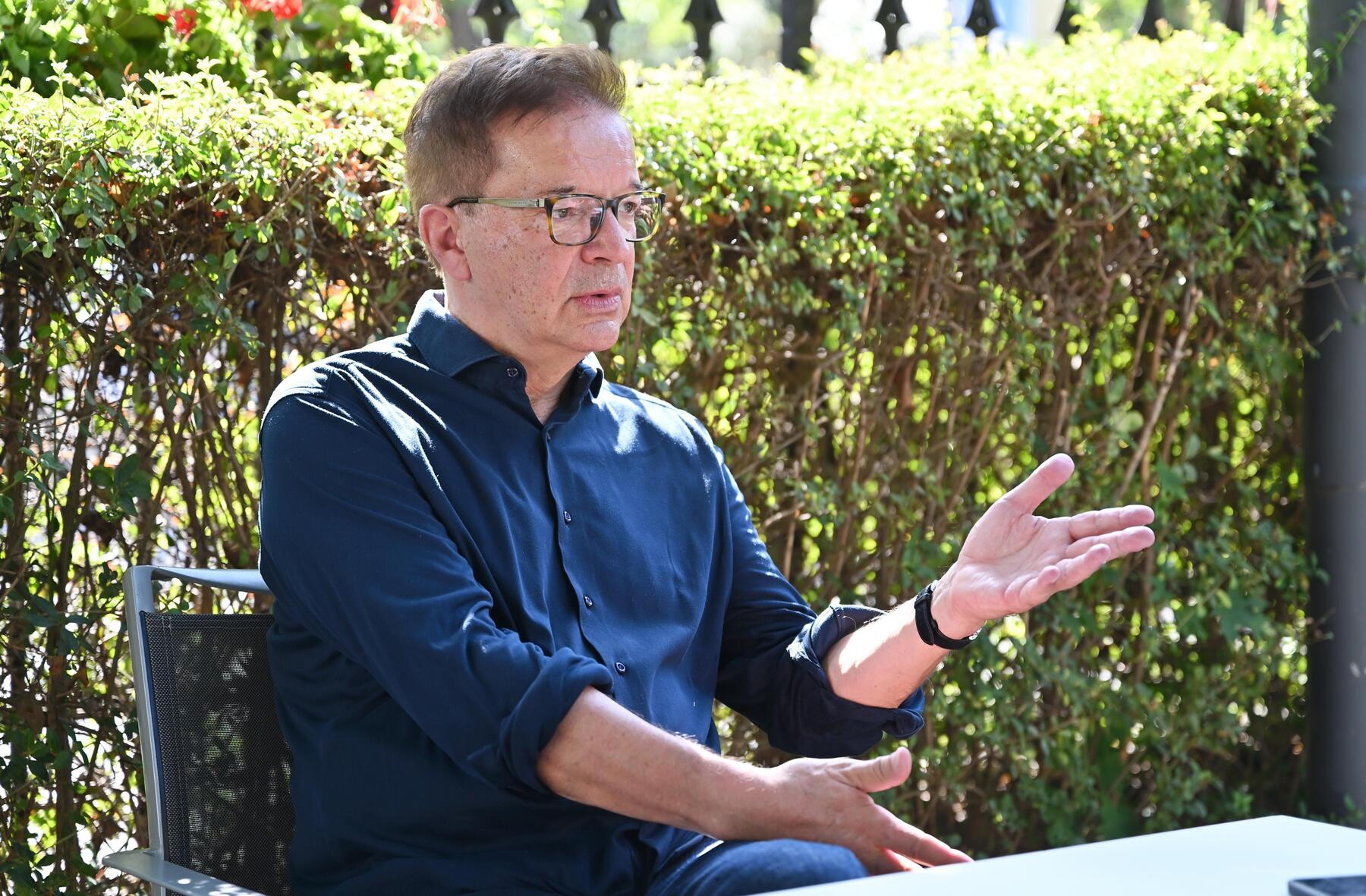
Ex-Health Minister Anschober is on a mission to encourage
Translated from German, summarized and contextualized by DistantNews.
At a glance
In-depth
Sources not specified
Context piece
- Former Austrian Health Minister Rudolf Anschober has written three books since leaving politics, focusing on future prospects and societal challenges.
- His latest book, "Ermutigung" (Encouragement), argues that the rise of the far-right stems from people losing faith in the future and the ability to shape it.
- Anschober aims to counter this by highlighting positive global developments and offering concrete reasons for hope, distinguishing it from mere optimism.
Rudolf Anschober, Austria's former Green Party health minister during the pandemic, has found a new mission in encouraging people to believe in a positive future. Since leaving the federal government in 2021, Anschober has dedicated himself to exploring topics he deems important, resulting in three books.
After leaving the federal government in 2021, I considered what the opportunities were in this, my crisis.
His latest work, "Ermutigung: Erfolgsgeschichten für eine bessere Welt" (Encouragement: Success Stories for a Better World), published in 2024, directly addresses what he sees as a dangerous global trend: the rise of the far-right. Anschober posits that this political shift is fueled by a widespread loss of faith in the future and a diminished sense of agency. He notes that surveys indicate a majority of Europeans expect things to worsen, a sentiment he finds "catastrophic."
I find this intense rightward shift that is asserting itself internationally to be dramatic. I spent many months grappling with how this is happening.
Anschober argues that the far-right capitalizes on this despair by offering an "illusion of a great time machine," harkening back to a perceived simpler past before migration, climate change, or pandemics. This appeal, he suggests, resonates with individuals overwhelmed by the rapid pace of digital progress. He observes a correlation: the bleaker the public mood, the greater the electoral success for the extreme right.
My thesis is that very many people have lost faith in the future, that the idea that we can shape the future has been lost.
In contrast, Anschober believes center-left movements have struggled to present a compelling vision for the future. With his book, the former elementary school teacher aims to provide a counter-narrative. He emphasizes that "hope is not the same as optimism." While optimism is a belief in a positive outcome, hope, for Anschober, must be "concretely justified" by tangible reasons for optimism, which he seeks to illustrate through examples of positive change worldwide.
Optimism is like a law of nature. I am an optimist because I believe in a positive outcome. But hope is always concretely justified.
DistantNews Editorial
Originally published by Die Presse in German. Translated, summarized, and contextualized by our editorial team with added local perspective. Read our editorial standards.
More Stories



From Our Blog

What Gets Lost (and Found) When News Is Translated

The Critical Role of Diaspora Media in Global News

What Travellers Should Know About Countries with Restricted Press

A Digital Nomad's Guide to Following Local News

How the Same Story Looks Different in Different Countries
