


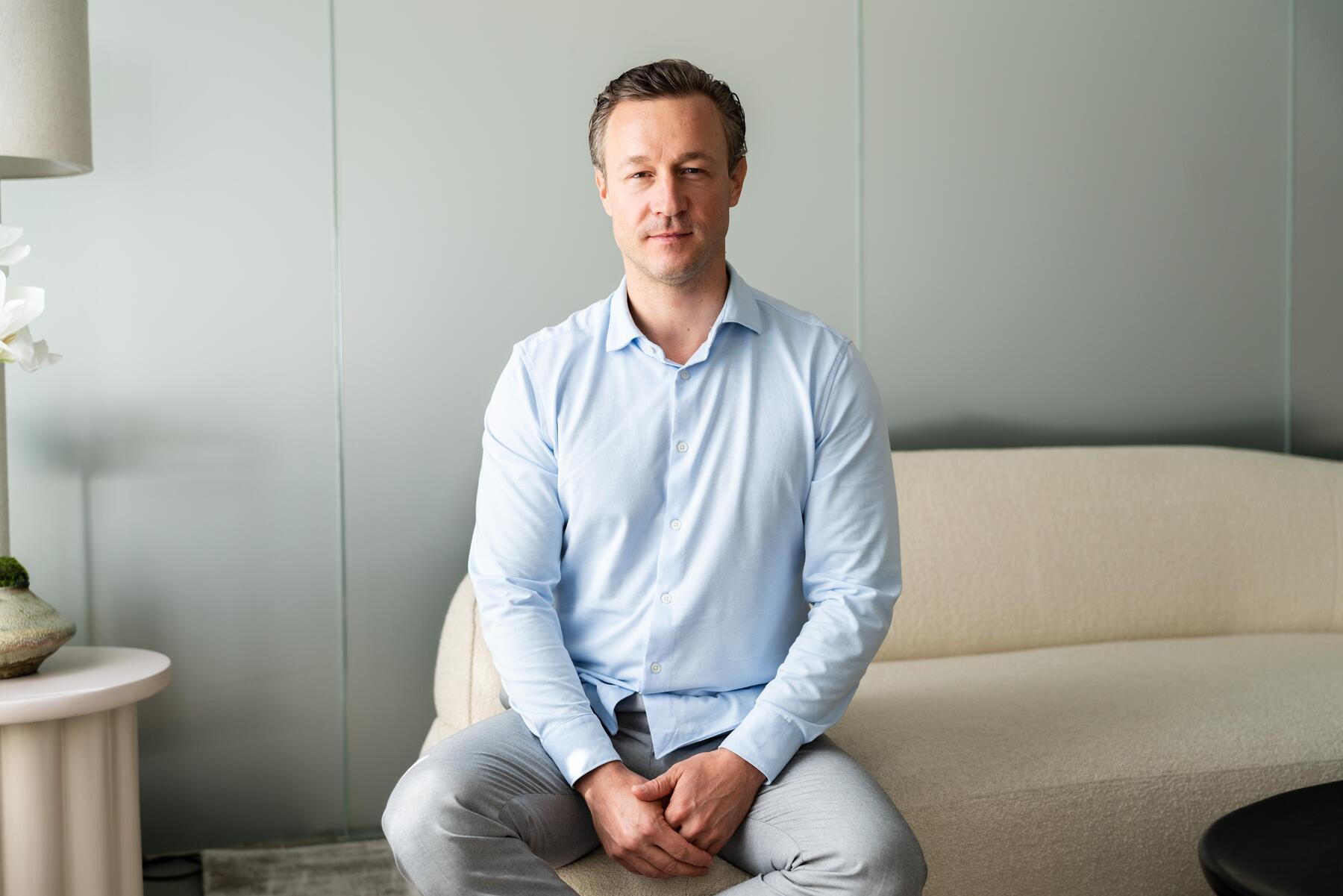
Ex-Minister Blümel on AI: 'We Will Be Paid for Activities We Can't Imagine Today'
Translated from German, summarized and contextualized by DistantNews.
At a glance
Interview
Named sources
Context piece
- Former Austrian Finance Minister Gernot Blümel believes artificial intelligence (AI) presents more opportunities than threats for the job market.
- He argues that historical technological advancements have ultimately created more jobs than they eliminated.
- Blümel also discusses AI as the 'fourth great human vanity-sundering,' following discoveries about the universe, evolution, and the subconscious.
Former Austrian Finance Minister Gernot Blümel views the ongoing artificial intelligence (AI) revolution as a significant opportunity for the labor market, rather than a threat. In an interview with "Die Presse," Blümel, who now works in digital medicine and AI for an international company, stated that while there will be a period of upheaval, historical precedents suggest technological progress ultimately leads to job creation.
All sectors will feel AI strongly. Craftsmen will likely be spared the longest. That craftsmanship has golden ground will gain new meaning in the coming transition period in an unforeseen way.
"Historically, every technical advancement has created more jobs than ever before after a period of transition," Blümel explained. He acknowledges the difficulty in predicting future job roles due to the profound changes AI will bring to the economic and social fabric. He specifically noted that tradespeople might be among the last to be significantly impacted by AI, giving new meaning to the adage that "craftsmanship has golden ground."
Blümel, who has authored a book titled "Die Selbstsetzung des Menschen" (The Self-Actualization of Man), also frames AI within a broader philosophical context. He posits that the resistance to acknowledging AI's cognitive capabilities stems from a wounded human ego. He likens this to the three previous "great vanity-sundering" moments in human history: the Copernican revolution (humans are not the center of the universe), Darwin's theory of evolution (humans evolved from apes), and Freud's discovery of the subconscious (humans are not entirely masters of their own minds).
Historically, every technical advancement has created more jobs than ever before after a period of transition. I think it will be the same here. However, we are finding it difficult to anticipate future activities today because the entire economic and social structure will change.
According to Blümel, AI represents the fourth such moment, challenging humanity's long-held belief in its unique intellectual superiority. He argues that in a secularized, Enlightenment-influenced world, human reason has been the primary basis for distinguishing humanity from other entities. AI's ability to surpass human cognitive functions in many areas directly confronts this notion, leading to what he describes as a reaction akin to wounded vanity.
We are all intellectual children of the West, whether we want to be or not. In this tradition, there have always been only two possibilities – to justify the so-called anthropological difference, i.e., what makes humans so special among all entities on this planet: being made in God's image or being endowed with reason. In a completely secularized world shaped by the Enlightenment, only reason is the characteristic that carries this anthropological difference.
On a personal note, Blümel described his transition from public life as a "double-edged sword." While he appreciates the increased privacy, he misses the platform that political life provided for promoting his professional projects. He finds it easier to gain attention for his work now that he is no longer a public figure.
The rejection of this realization is often expressed with such vehemence that it is reminiscent of wounded vanity.
DistantNews Editorial
Originally published by Die Presse in German. Translated, summarized, and contextualized by our editorial team with added local perspective. Read our editorial standards.
More Stories


From Our Blog

What Gets Lost (and Found) When News Is Translated

The Critical Role of Diaspora Media in Global News

What Travellers Should Know About Countries with Restricted Press

A Digital Nomad's Guide to Following Local News

How the Same Story Looks Different in Different Countries
