

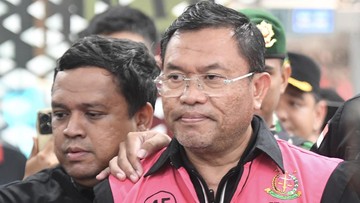

Ex-UGM student leader claims tracking device found under car
Translated from Indonesian, summarized and contextualized by DistantNews.
At a glance
News
Sources not specified
Under investigation
- Tiyo Ardianto, former chair of Universitas Gadjah Mada's Student Executive Board, claims he found a tracking device under his car.
- The device was discovered shortly after Ardianto participated in a protest on June 13, 2026.
- Ardianto suspects the tracking is related to his criticism of government policies and notes that friends have also received suspicious messages.
Tiyo Ardianto, the former chair of the Student Executive Board (BEM) at Universitas Gadjah Mada (UGM), alleges he was subjected to surveillance via a tracking device found attached to his car. Ardianto discovered what he identified as a PBX Finder tracking device beneath the chassis of a car he had borrowed.
I just realized there was an important and urgent notification, that a tracking device called PBX Finder was found moving with me.
The incident occurred on Saturday, June 13, 2026, shortly after Ardianto participated in a protest in Yogyakarta alongside students and civil society groups. He stated that an urgent notification alerted him to the moving tracking device. Ardianto, a philosophy undergraduate, borrowed the car from his brother, citing safety concerns during his recent travels.
I don't know who installed the tracking device
Ardianto expressed that the use of such tracking methods by an unknown individual is unusual. He linked the incident to what he described as the oppressive tactics of the current regime, which he claims often targets critics of government policies. He also noted that several friends within the UGM BEM have reported receiving numerous messages from an unknown sender since June 13, with dozens of messages possibly sent.
It hasn't been counted how many, but probably around 30
He lamented these methods of intimidation, aimed at silencing critical voices. Ardianto argued that civil society's criticism is intended for national improvement and stems from genuine love for the country. However, he feels this concern is met with threats and danger, likening criticism to medicine for a government whose policies he deems harmful to the people. "How dangerous it is to be an Indonesian who loves his country. We give medicine for its ailments, but it tries to poison us," he stated.
How dangerous it is to be an Indonesian who loves his country. We give medicine for its ailments, but it tries to poison us.
DistantNews Editorial
Originally published by Tempo in Indonesian. Translated, summarized, and contextualized by our editorial team with added local perspective. Read our editorial standards.
More Stories



From Our Blog

What Gets Lost (and Found) When News Is Translated

The Critical Role of Diaspora Media in Global News

What Travellers Should Know About Countries with Restricted Press

A Digital Nomad's Guide to Following Local News

How the Same Story Looks Different in Different Countries
