


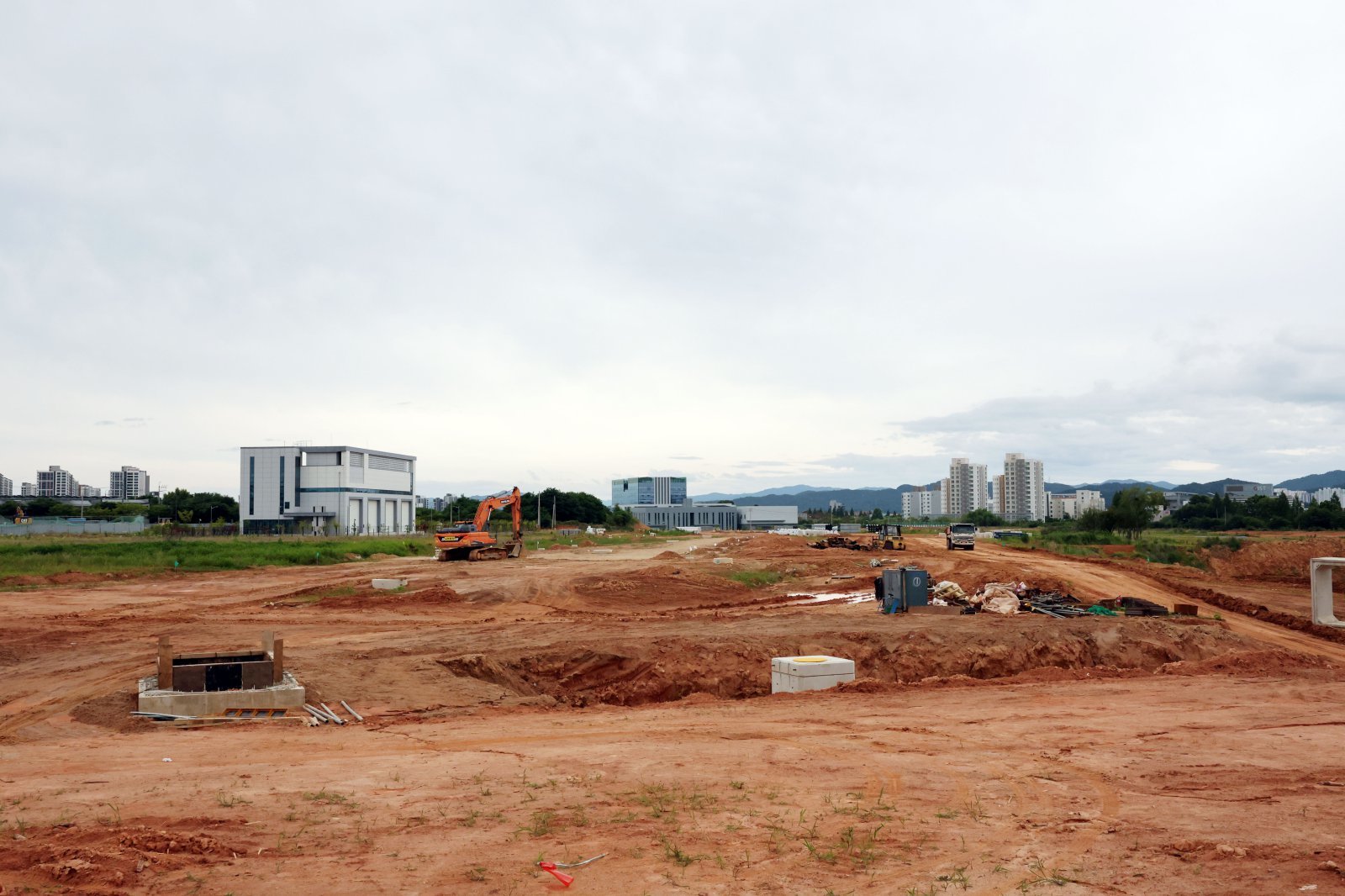
Expanding Semiconductor Belt Requires Overcoming Infrastructure Hurdles
Translated from Korean, summarized and contextualized by DistantNews.
At a glance
Opinion
Sources not specified
Context piece
- Samsung and SK Hynix are considering expanding semiconductor production from the Seoul metropolitan area to the Chungcheong and Honam regions of South Korea.
- The expansion aims to promote balanced national development and align with the AI era, but faces infrastructure challenges.
- Key infrastructure needs include stable high-voltage power, water supply, and skilled personnel, with government and local support being crucial for success.
South Korean tech giants Samsung and SK Hynix are exploring significant expansions of their semiconductor manufacturing capabilities, moving beyond the concentrated Seoul metropolitan area to the Chungcheong and Honam regions. This strategic shift is driven by the government's push for balanced national development and the companies' proactive investment strategies in the burgeoning AI era.
However, the success of these ambitious plans hinges critically on the availability and stability of essential infrastructure. Building a single semiconductor fabrication plant (fab) requires immense investment, approximately 100 trillion won, and takes seven to eight years. Even with available land, the absence of reliable 24-hour high-voltage power, a consistent water supply, and a pool of highly skilled personnel, including PhDs and master's degree holders, makes such an undertaking impossible.
The article emphasizes that investment decisions must be guided by the companies' business rationality and autonomous judgment. Regions like Jeonnam and Gwangju, considered potential semiconductor cluster sites, boast abundant renewable energy sources. Yet, concerns remain about the intermittent nature of power supply due to weather conditions and the limited water flow from the Yeongsan River, raising questions about supply stability.
Furthermore, attracting and retaining talent poses a significant challenge, with the region reportedly facing difficulties in securing skilled workers. The article points to the SK Hynix Yongin complex, which broke ground six years after its initial announcement due to issues with resident consensus, water supply, and power infrastructure. In contrast, Taiwan's TSMC broke ground on its Kumamoto, Japan, fab just six months after its 2021 announcement, highlighting the impact of swift government and local authority support.
To realize the vision of an expanded "K-semiconductor" belt, the article argues that South Korea must mobilize national resources to upgrade regional infrastructure. This includes ensuring government and local authorities provide unwavering support, avoiding bureaucratic delays, and refraining from imposing unnecessary demands once investment decisions are made. The success of Taiwan's semiconductor cluster expansion since the mid-1990s, heavily backed by the government, serves as a model for South Korea's aspirations.
DistantNews Editorial
Originally published by Dong-A Ilbo in Korean. Translated, summarized, and contextualized by our editorial team with added local perspective. Read our editorial standards.
More Stories


From Our Blog

What Gets Lost (and Found) When News Is Translated

The Critical Role of Diaspora Media in Global News

What Travellers Should Know About Countries with Restricted Press

A Digital Nomad's Guide to Following Local News

How the Same Story Looks Different in Different Countries
