


Expert: Administrative Errors Do Not Dismiss Suspect Status in Febrie Case
Translated from Indonesian, summarized and contextualized by DistantNews.
At a glance
News
Named sources
In the courts
- A legal expert stated that administrative errors do not invalidate the suspect status of former Deputy Attorney General Febrie Adriansyah in a money laundering case.
- The expert explained that procedural mistakes in administrative documents can be corrected without affecting the core investigation or the determination of a suspect.
- The defense had requested the cancellation of Adriansyah's suspect status and related legal actions, citing administrative irregularities.
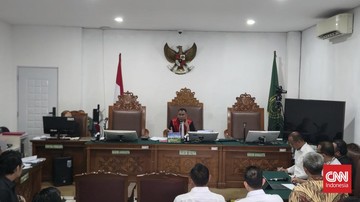
Administrative errors in legal proceedings do not nullify a suspect's status, according to Marcus Priyo Gunarto, a professor of criminal law at Gadjah Mada University. He stated this in response to the ongoing pre-trial hearing for former Deputy Attorney General for Special Crimes, Febrie Adriansyah, at the South Jakarta District Court.
Gunarto explained that the investigation process involves numerous administrative actions, and mistakes in document preparation do not invalidate the entire investigation. He emphasized that the determination of a suspect is based on the procedure of gathering evidence. If administrative errors occur, they can be rectified without impacting the substance of the case or the investigative process itself.
Indeed, in the investigation process, there are very many administrative actions. Errors in the preparation of administrative documents do not then invalidate the entire process within that investigation.
"An investigation gathers evidence, clarifies the crime that occurred, and determines the suspect; that is the principle," Gunarto stated. "So, it does not cancel that; the administrative error is simply corrected."
An investigation gathers evidence, clarifies the crime that occurred, and determines the suspect; that is the principle. So, it does not cancel that; the administrative error is simply corrected.
He further elaborated on the new Criminal Procedure Code (KUHAP), noting that law enforcement is not obligated to physically examine individuals before designating them as suspects. According to Article 90 of Law Number 20 of 2025 concerning KUHAP, the designation of a suspect requires only two pieces of evidence. This interpretation is reinforced by Article 92, which allows investigators to seek public assistance in locating a suspect if their whereabouts are unknown.
Gunarto concluded that suspects can be named without prior physical examination, as Article 92 permits seeking help from the public or media to find them. Additionally, Article 184 of KUHAP allows for the designation of suspects in absentia if they are unavailable for examination. Febrie Adriansyah had requested the court to nullify his suspect status and all related legal actions, including the investigation order, seizure, and travel ban, citing these administrative issues.
Because there it is possible to ask for help from the public, from the media, the whereabouts of the suspect. The suspect there, the 'T' is written with a capital letter. The meaning is that the suspect is an authentic interpretation contained in Article 1 definition of suspect.
DistantNews Editorial
Originally published by CNN Indonesia in Indonesian. Translated, summarized, and contextualized by our editorial team with added local perspective. Read our editorial standards.
More Stories


From Our Blog

What Gets Lost (and Found) When News Is Translated

The Critical Role of Diaspora Media in Global News

What Travellers Should Know About Countries with Restricted Press

A Digital Nomad's Guide to Following Local News

How the Same Story Looks Different in Different Countries
