

Experts Analyze 'Farmear Aura': Youth's Public Performance Trend in Mexico
Translated from Spanish, summarized and contextualized by DistantNews.
At a glance
In-depth
Named sources
Context piece
- A trend called 'farmear aura,' where young people perform public acts to challenge ridicule and gain social prestige, is gaining traction among youth in Mexico.
- Experts suggest this phenomenon, amplified by pandemic-era isolation and digital surveillance, is a political and identity-based manifestation.
- Sociologists view it as a way for youth to reclaim urban spaces and assert their right to the city, challenging traditional social norms.
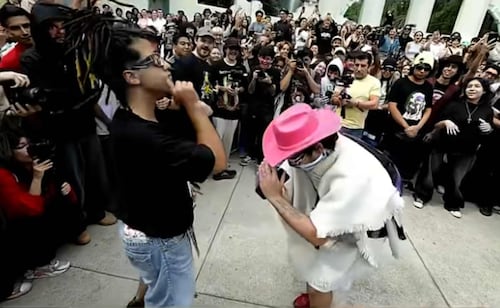
A growing trend known as 'farmear aura' is capturing the attention of young people in Mexico, involving public performances designed to provoke reactions, challenge ridicule, and ultimately accumulate social prestige. This phenomenon transcends a mere internet fad, emerging as a significant response from a generation that grew up amidst pandemic lockdowns and constant digital scrutiny.
Experts define 'aura' as an individual's symbolic status, presence, charisma, or social capital within their community. 'Farmear,' borrowed from the English verb 'to farm,' refers to the repetitive tasks undertaken in virtual environments to gather resources or recognition. Thus, 'farmear aura' is a performative practice where young individuals deliberately engage in public acts to court attention and enhance their social standing.
Sociologist Raúl Reyes explains that these codes are legitimately adopted by the youth to forge a sense of belonging. He criticizes the tendency of older generations to dismiss the trend as a fleeting 'fashion,' overlooking the underlying structural shifts occurring in public spaces. Reyes emphasizes that digital virality is translating into physical action through 'agency and assembly,' with parks and plazas becoming venues for these 'battles.'
This reclaiming of urban spaces is seen as a political act, challenging the norms imposed by previous generations and asserting the youth's right to the city. Clinical psychologist Axel Isaac Zepeda Bello views 'farmear aura' from an emotional and behavioral health perspective, suggesting it serves as a social function for self-presentation and collective validation within a neoliberal identity market. The public sphere is thus being repurposed as a stage for protest, socialization, and the reaffirmation of class and identity.
DistantNews Editorial
Originally published by El Universal in Spanish. Translated, summarized, and contextualized by our editorial team with added local perspective. Read our editorial standards.
More Stories

From Our Blog

What Press Freedom Means for the News You Read

What Gets Lost (and Found) When News Is Translated

The Critical Role of Diaspora Media in Global News

What Travellers Should Know About Countries with Restricted Press

A Digital Nomad's Guide to Following Local News
