


Experts review YKS exam questions, noting balanced assessment of skills
Translated from Turkish, summarized and contextualized by DistantNews.
At a glance
News
Sources not specified
Context piece
- Experts evaluated the questions from the second session of the YKS university entrance exam, focusing on Turkish language and literature, social sciences, and geography.
- The Turkish language and literature test measured both knowledge and interpretation skills, with a notable emphasis on poets, works, and literary periods.
- Social sciences and geography questions were designed according to the curriculum, assessing historical knowledge, map reading, and analytical skills, with varying difficulty levels.
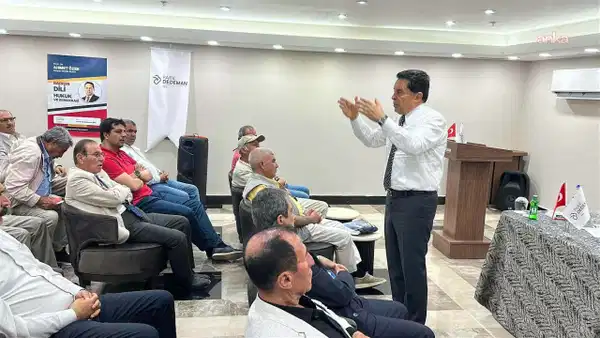
Academics have offered their assessments of the second session of the 2026 YKS university entrance exam, specifically analyzing the questions posed in the Turkish Language and Literature, Social Sciences, and Geography sections. Birsen Çiçek, Head of the Turkish Language and Literature Department, described the test as well-balanced, effectively measuring both factual knowledge and interpretive abilities. The questions heavily featured information on artists, their works, literary periods, and movements, while also highlighting text analysis and inference skills. Çiçek noted a significant number of questions related to Divan and folk literature, with challenging distractors requiring students to combine literary knowledge with analytical prowess. She characterized the overall test as medium-to-high difficulty, containing questions with high discriminative power, benefiting students who read regularly and support their literary knowledge with analytical skills.
The 2026 AYT Turkish Language and Literature test has a balanced structure that measures both knowledge and interpretation skills. While information on artists-works, periods, and literary movements gained prominence in the questions, text analysis and inference skills also came to the forefront. The abundance of questions related to Divan and folk literature was particularly noteworthy. Strong distractors were used in paragraph and text-centered questions, expecting students to combine their knowledge with interpretive power. The test is generally medium-to-high level and contains highly discriminating questions. It is an exam that provides an advantage to students who read regularly and support their literary knowledge with analytical skills.
Turgut Özel, Head of the Social Sciences Department, detailed the structure of the social sciences tests. The Social Sciences 1 test included 10 history questions, while Social Sciences 2 featured 11. These questions aligned with the Ministry of National Education curriculum for grades 9-12. The history questions were information-heavy and selective in terms of historical literacy. Specifically, Social Sciences 1 drew 4 questions from grade 9, 1 from grade 10, 1 from grade 11, and 4 from 12th-grade Turkish Republic history. Social Sciences 2's 11 history questions were considered easier and more balanced compared to previous years. The history questions overall aimed to assess chronological knowledge, map-reading skills, and conceptual analysis, covering topics like satrapies, the Sublime Porte, and the Saltukname.
In the 2026 AYT Social Sciences 1 test, 10 history questions were asked, and in the Social Sciences 2 test, 11 questions were asked. The questions, prepared in accordance with the achievements in the 9th, 10th, 11th, and 12th-grade MEB curriculum, were information-heavy and selective in terms of historical literacy. In Social Sciences 1, 4 questions were from 9th grade, 1 from 10th grade, 1 from 11th grade, and 4 from 12th-grade Turkish Republic history. In Social Sciences 2, the 11 history questions were asked in a much easier and more balanced distribution compared to previous years. Consequently, the 2026 AYT history questions consist of questions that measure chronological knowledge, map reading skills, and conceptual analysis (Satrapies, Sublime Porte, Saltukname, etc.). The questions were prepared in accordance with the curriculum achievements of both Social-1 and Social-2 tests.
Emin Avni Atalar, Head of the Geography Department, reported that geography questions comprised 6 items in the Social Sciences 1 test and 11 in Social Sciences 2, all adhering to the 11th and 12th-grade curriculum. Social Sciences 1 had 3 questions from grade 11 and 3 from grade 12. These questions were primarily knowledge-based and selective, measuring students' geographical literacy. The questions in Social Sciences 2 were deemed easier and more manageable than in previous years, with a balanced distribution. The geography section focused on assessing subject knowledge, interpretive skills, and particularly map-reading abilities. Atalar concluded that the exam was clear and understandable, accessible to students with a strong grasp of the subject, regular study habits, and developed geographical literacy.
In the AYT Social Sciences-1 test, there were 6 geography questions, and in the Social Sciences-2 test, there were 11 questions. All questions were prepared in accordance with the achievements in the 11th and 12th-grade MEB curriculum. In Social Sciences 1, 3 questions were from the 11th grade, and 3 questions were from the 12th grade. Generally, these knowledge-heavy questions were selective, measuring students' geographical literacy. The questions in Social Sciences 2 were found to be easier and more manageable than in previous years, with a balanced question distribution. Throughout the exam, questions were included to measure field knowledge, interpretive power, and especially map-reading skills in geography. Consequently, a clear and understandable exam was conducted, which could be successfully completed by students who are proficient in their field knowledge, study regularly, and have developed geographical literacy.
Mahmut Şişmanoğlu, Head of the Mathematics Department, commented that the exam maintained the ÖSYM's (Student Selection and Placement Center) recent standards, offering no major surprises for well-prepared candidates. The difficulty level was assessed as medium-to-hard. He noted the presence of questions in the style of the TYT (Basic Proficiency Test), requiring attention and time management, which could potentially distract students. However, this aspect did not fundamentally alter the exam's overall predictability for diligent test-takers.
The exam maintained the ÖSYM's line in recent years and did not contain major surprises for well-prepared candidates. The difficulty level of the exam was medium-to-hard. Questions in the TYT style, requiring attention and time management, and potentially distracting students, were noticeable. However, this situation...
DistantNews Editorial
Originally published by Cumhuriyet in Turkish. Translated, summarized, and contextualized by our editorial team with added local perspective. Read our editorial standards.
More Stories

From Our Blog

What Gets Lost (and Found) When News Is Translated

The Critical Role of Diaspora Media in Global News

What Travellers Should Know About Countries with Restricted Press

A Digital Nomad's Guide to Following Local News

How the Same Story Looks Different in Different Countries
