


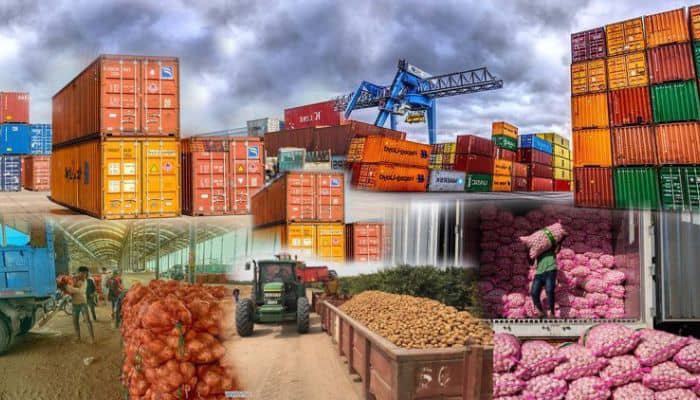
Export rerouting erodes Nigeria’s gains despite N7.55trn trade surplus — NESG
Summarized and contextualized by DistantNews.
At a glance
News
Named sources
Context piece
- Nigeria's trade surplus reached N7.55 trillion in Q1 2026, with total merchandise trade at N34.79 trillion.
- The Nigerian Economic Summit Group warns that export rerouting through neighboring countries undermines competitiveness and deprives Nigeria of domestic value.
- Weak quality assurance, inefficient ports, and complex procedures drive exporters to use alternative routes, costing Nigeria significant economic benefits.
Despite Nigeria recording an impressive N7.55 trillion trade surplus in the first quarter of 2026, the Nigerian Economic Summit Group (NESG) has issued a stark warning. The private sector think tank cautions that the headline trade figures mask a critical issue: export rerouting through neighboring countries is eroding Nigeria's trade competitiveness and siphoning off substantial domestic economic value.
Data from the National Bureau of Statistics reveals Nigeria's total merchandise trade surged to N34.79 trillion in Q1 2026, with exports at N21.17 trillion and imports at N13.62 trillion. While this resulted in a significant positive balance, NESG emphasizes that Nigeria loses out on crucial economic benefits when locally produced goods are exported via other nations before reaching their final destinations. This rerouting deprives the country of logistics income, distorts trade statistics, weakens product branding, and limits Nigeria's ability to capture the full value generated by its exports.
The NESG identifies several key factors pushing Nigerian exporters to seek alternative trade routes. These include weak quality assurance and certification systems, inefficient port operations, and cumbersome export procedures. The group stresses that globally recognized certification is vital for accessing international markets. When Nigerian exporters cannot obtain credible domestic certification, neighboring countries often step in to provide the final export channel, reaping the associated benefits.
Sectors like agriculture, food processing, textiles, leather, and manufacturing stand to gain immensely if Nigeria improves its certification processes, allowing exporters to access foreign markets directly and retain more value domestically. Furthermore, NESG urges authorities to tackle long-standing bottlenecks at Nigerian ports. Addressing issues such as congestion, excessive documentation, delays, and high logistics costs is presented not just as a transportation improvement but as a strategic imperative for boosting Nigeria's export competitiveness, particularly within the African Continental Free Trade Area (AfCFTA) and the broader global trading system.
DistantNews Editorial
Originally published by Vanguard. Summarized and contextualized by our editorial team with added local perspective. Read our editorial standards.
More Stories



From Our Blog

How the Same Story Looks Different in Different Countries

What Gets Lost (and Found) When News Is Translated

The Critical Role of Diaspora Media in Global News

What Travellers Should Know About Countries with Restricted Press

A Digital Nomad's Guide to Following Local News
