


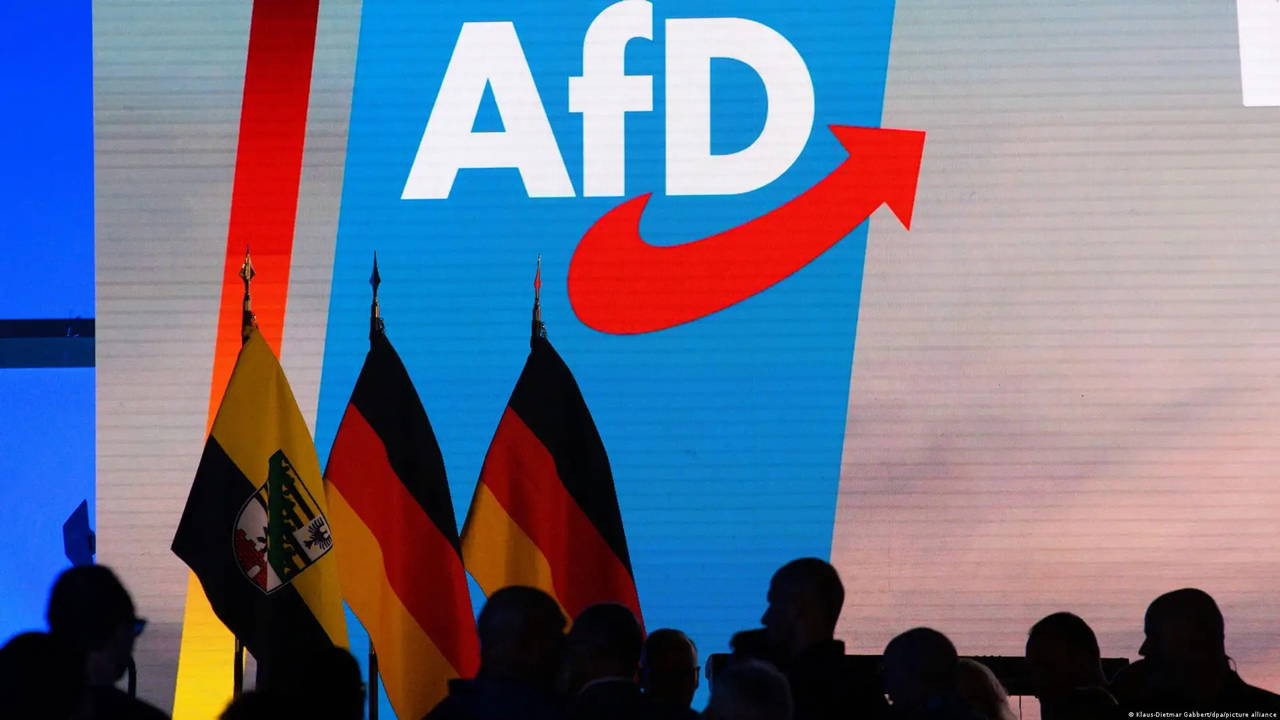
Far right could push Germany into economic crisis as euro exit scenarios enter debate
Translated from Turkish and summarized by DistantNews. Read the original for the full story.
At a glance
Analysis
Documents & data
Ongoing story
- Economists warn that the Alternative for Germany's anti-immigration policies could worsen labor shortages and weaken economic growth.
- The party's proposal to leave the European Union and eurozone is presented as a risk to Germany's export-dependent economy.
- Analysts identify possible losses in prosperity, labor supply, exports, public finances and energy security if the AfD enters government.
The rise of the far-right Alternative for Germany is prompting warnings about more than Germany's political direction. Economists cited in the discussion say the party's anti-immigration policies and eurozone exit proposal could expose the economy to serious risks.
State elections are scheduled for Sept. 6 in Saxony-Anhalt and Sept. 20 in Berlin and Mecklenburg-Vorpommern. Recent polling indicates that both the Left Party and AfD could perform strongly in those states. In Berlin, the AfD stood third with 17% support in the latest INSA survey, as political polarization increased ahead of the vote.
The governing coalition of Chancellor Friedrich Merz's Christian Democratic Union and the Social Democratic Party is reported to be losing support in the capital. Uncertainty has also grown around the CDU's candidate, Stefan Evers, whose public profile is described as low following the resignation of Berlin state premier Kai Wegner. A three-party coalition involving the Left Party, Greens and SPD is also under discussion.
The AfD has linked Berlin's housing crisis to immigration and supports reserving social housing for "locals." Economic assessments cited in the debate list five main risks from its program: reduced prosperity, labor shortages caused by immigration policies, export damage from leaving the eurozone, possible budget deficits and greater energy dependence if renewable-energy policies are opposed.
One estimate says populist economic policies could reduce output by an average of 10% over the long term, equivalent to about 450 billion euros for Germany. The analysis also warns that damage to democratic institutions could deter international investment, since 93% of companies consider the rule of law their most important investment criterion. Experts say stopping immigration could create a labor shortage of 7 million people over the next 15 years as Germany's population ages.
About this summary
Originally published by Cumhuriyet in Turkish. Translated, summarized, and contextualized automatically by DistantNews, with a note on how the source frames the story. Not individually reviewed before publishing. How this works.
More Stories


From Our Blog

What Gets Lost (and Found) When News Is Translated

The Critical Role of Diaspora Media in Global News

What Travellers Should Know About Countries with Restricted Press

A Digital Nomad's Guide to Following Local News

How the Same Story Looks Different in Different Countries
