


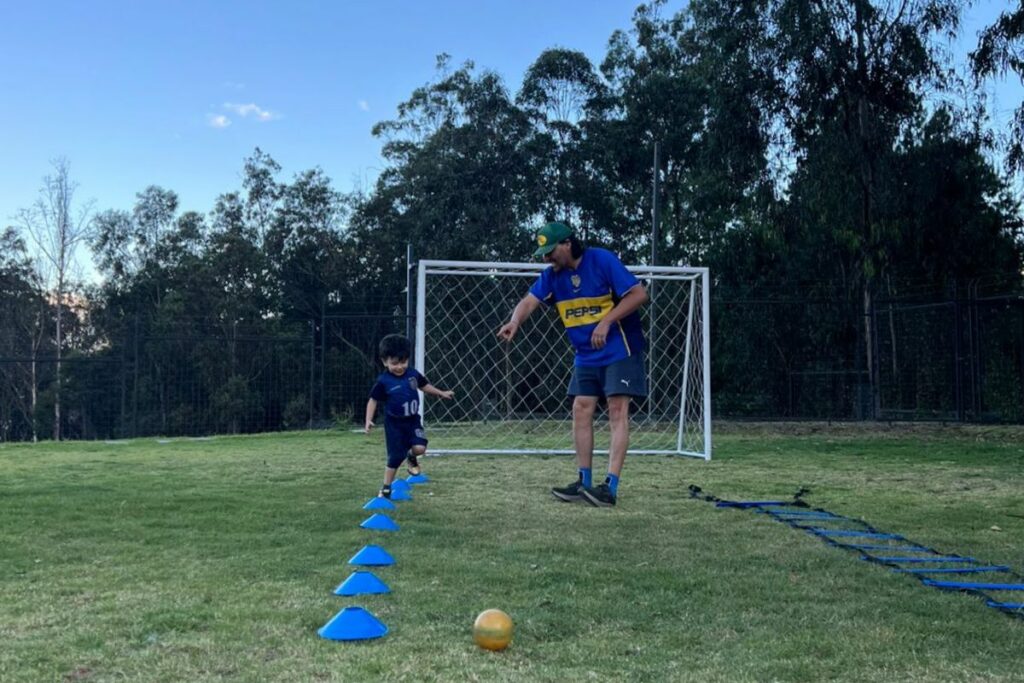
Father's Day: How to Identify Your Child's Sports Skills?
Translated from Spanish, summarized and contextualized by DistantNews.
At a glance
In-depth
Named sources
Context piece
- Parents can identify early signs of athletic ability in children between ages 6 and 10.
- Key indicators include coordination, speed, agility, endurance, natural strength, and a positive attitude towards movement.
- Experts caution that physical maturity before puberty can be mistaken for talent, with true athletic potential becoming clearer after age 12 or 13.
Parents can spot early signs of athletic potential in their children between the ages of 6 and 10, according to sports medicine experts. These formative years are considered a "golden age" for motor learning, as a child's central nervous system develops significantly, enhancing coordination, balance, and the ability to acquire new movements.
the central nervous system reaches almost 95% of its adult size in that period. Coordination, balance, and the ability to learn new movements are at their peak.
Key indicators to observe include a child's coordination, such as moving with ease and throwing or catching a ball without losing balance. Speed and agility are evident when a child can change direction quickly without falling. Endurance is shown by a child's ability to play for extended periods without frequent breaks. Natural strength can be seen in actions like climbing well for their age or ascending stairs rapidly. Finally, a child's attitude, marked by seeking out movement independently, resilience after falling, and a desire to repeat activities, signals potential.
before puberty it is not possible to predict athletic talent with certainty. The one who stands out is usually the one who matured physically earlier, not the one with more talent.
However, experts emphasize that these early signs should be interpreted with caution. Sports physician Carlos Salazar warns that before puberty, around ages 12 or 13, a child who excels may simply be experiencing earlier physical maturation rather than possessing true athletic talent. "Real talent is seen after puberty, when technique, maturity, and consistency are present," Salazar stated. He also advises against relying on a single sign, noting that "all children have good days and bad days."
Real talent is seen after puberty, when technique, maturity, and consistency are present.
While early identification can help parents nurture potential, it's crucial not to pressure children. The focus should remain on encouraging movement and play, rather than performance or championships. The goal is to recognize and support a child's natural inclination towards sports without jeopardizing their enjoyment or development.
All children have good days and bad days. A single sign does not mean talent.
DistantNews Editorial
Originally published by El Comercio in Spanish. Translated, summarized, and contextualized by our editorial team with added local perspective. Read our editorial standards.
More Stories


From Our Blog

What Gets Lost (and Found) When News Is Translated

The Critical Role of Diaspora Media in Global News

What Travellers Should Know About Countries with Restricted Press

A Digital Nomad's Guide to Following Local News

How the Same Story Looks Different in Different Countries
