


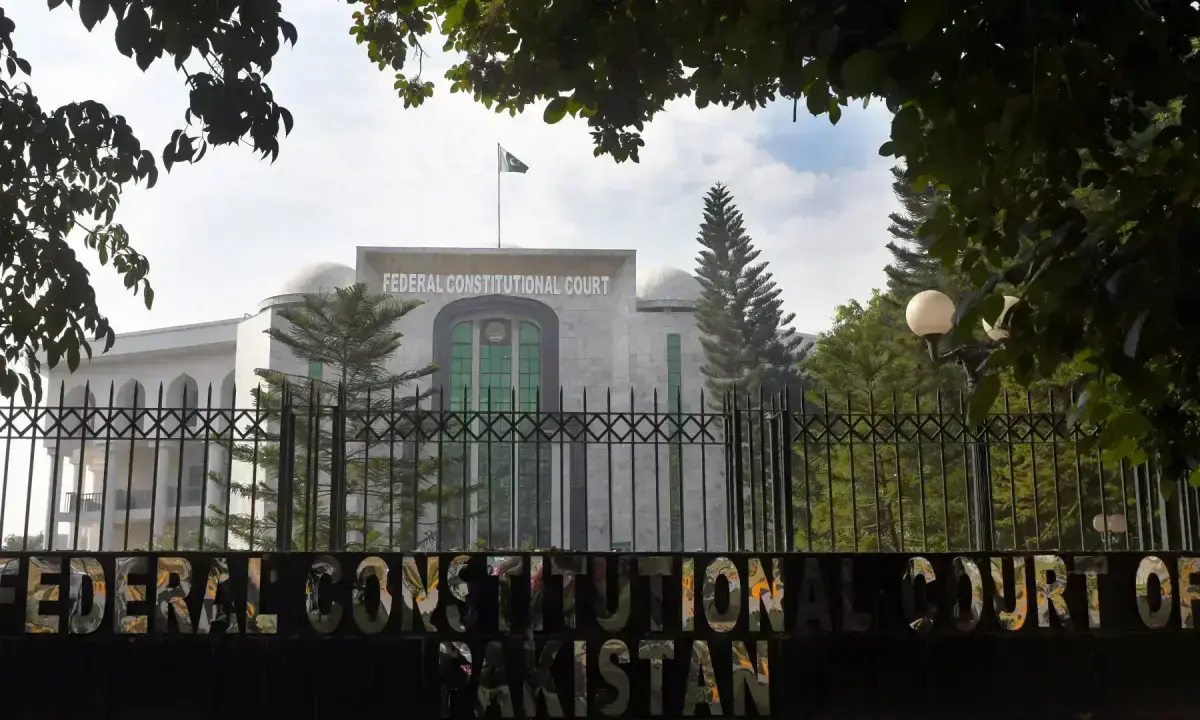
FCC rules income tax on immovable properties ‘confiscatory in nature’
Summarized and contextualized by DistantNews.
At a glance
News
Sources not specified
Context piece
- Pakistan's Federal Constitutional Court ruled that a section of the Income Tax Ordinance taxing immovable properties is confiscatory.
- The court found Section 7E of the ordinance invalid because it imposes taxes on assets that do not generate income.
- This ruling could compel property owners to sell assets to meet tax liabilities, potentially impacting non-income-generating properties.
Pakistan's Federal Constitutional Court has declared a key provision of the Income Tax Ordinance 'confiscatory in nature,' striking down its application to immovable properties. The court ruled that Section 7E of the Income Tax Ordinance 2001 is invalid because it levies taxes on assets that do not generate income, or in some cases, are incapable of generating any income.
Chief Justice Aminuddin Khan of the FCC observed that the practical effect of this tax levy could force individuals owning non-income-generating assets to dispose of them merely to meet their tax obligations. This ruling directly challenges the government's ability to tax assets based on their value rather than their earning potential.
The court's judgment came as parliament was debating the finance bill for 2026, which included proposals to implement a previous short order from May 7. That order had declared Section 7E ultra vires. Introduced via the Finance Act 2022, this section empowered authorities to charge taxes on 'deemed incomes' derived from assets and properties, regardless of actual income generation.
The practical effect of such a levy is that a person owning a non-income-generating asset may be compelled to dispose of the asset to meet tax liability.
DistantNews Editorial
Originally published by Dawn. Summarized and contextualized by our editorial team with added local perspective. Read our editorial standards.
More Stories



From Our Blog

What Gets Lost (and Found) When News Is Translated

The Critical Role of Diaspora Media in Global News

What Travellers Should Know About Countries with Restricted Press

A Digital Nomad's Guide to Following Local News

How the Same Story Looks Different in Different Countries
