

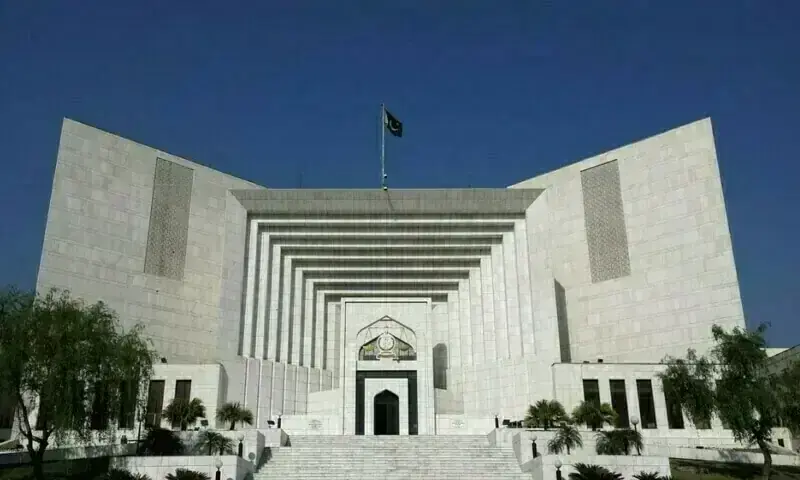

FCC ruling places onus of illegal construction on Sindh govt
Translated from English, summarized and contextualized by DistantNews.
At a glance
News
Named sources
Outcome reported
- Senior lawyers support the Federal Constitutional Court's decision to limit the Supreme Court's authority in ordering demolitions.
- The ruling shifts responsibility to the Sindh government and its building control authority to prevent illegal construction.
- Experts emphasize the need for provincial authorities to regulate public amenities and preserve them for future generations.
Senior lawyers and constitutional experts have backed the Federal Constitutional Court's (FCC) ruling that the Supreme Court overstepped its authority by ordering a citywide demolition drive, including the 15-storey Nasla Tower. The FCC's decision effectively recalls some of the Supreme Court's previous orders.
the Supreme Court had overstepped its domain
These legal experts argue that the Supreme Court exceeded its scope, particularly in its appellate jurisdiction, when issuing broad demolition mandates. The responsibility for regulating and preserving public amenities now rests with the Sindh government and the Sindh Building Control Authority (SBCA).
The FCC clarified that its ruling does not legitimize illegal construction. Instead, it places a constitutional and statutory duty on provincial authorities to supervise these matters according to existing laws and regulations. The goal is to ensure public amenities remain accessible for present and future generations.
the Supreme Court had gone beyond its scope to pass the orders regarding demolition of wedding halls, buildings and other commercial establishments
Former attorney general Anwar Mansoor Khan and former Sindh advocate general Barrister Zameer Ghumro both agreed that the Supreme Court had gone beyond its purview. They noted that the FCC ruling emphasizes that the fate of disputed plots and any illegal construction will be determined by provincial authorities and the SBCA in strict compliance with relevant laws.
the SC had exceeded its purview in the subject matters ignoring the fact that it was the domain of relevant authorities to decide and regulate the issues of illegal or unauthorised construction or conservation of land in accordance with the applicable laws and rules
DistantNews Editorial
Originally published by Dawn in English. Translated, summarized, and contextualized by our editorial team with added local perspective. Read our editorial standards.
More Stories



From Our Blog

What Gets Lost (and Found) When News Is Translated

The Critical Role of Diaspora Media in Global News

What Travellers Should Know About Countries with Restricted Press

A Digital Nomad's Guide to Following Local News

How the Same Story Looks Different in Different Countries
