


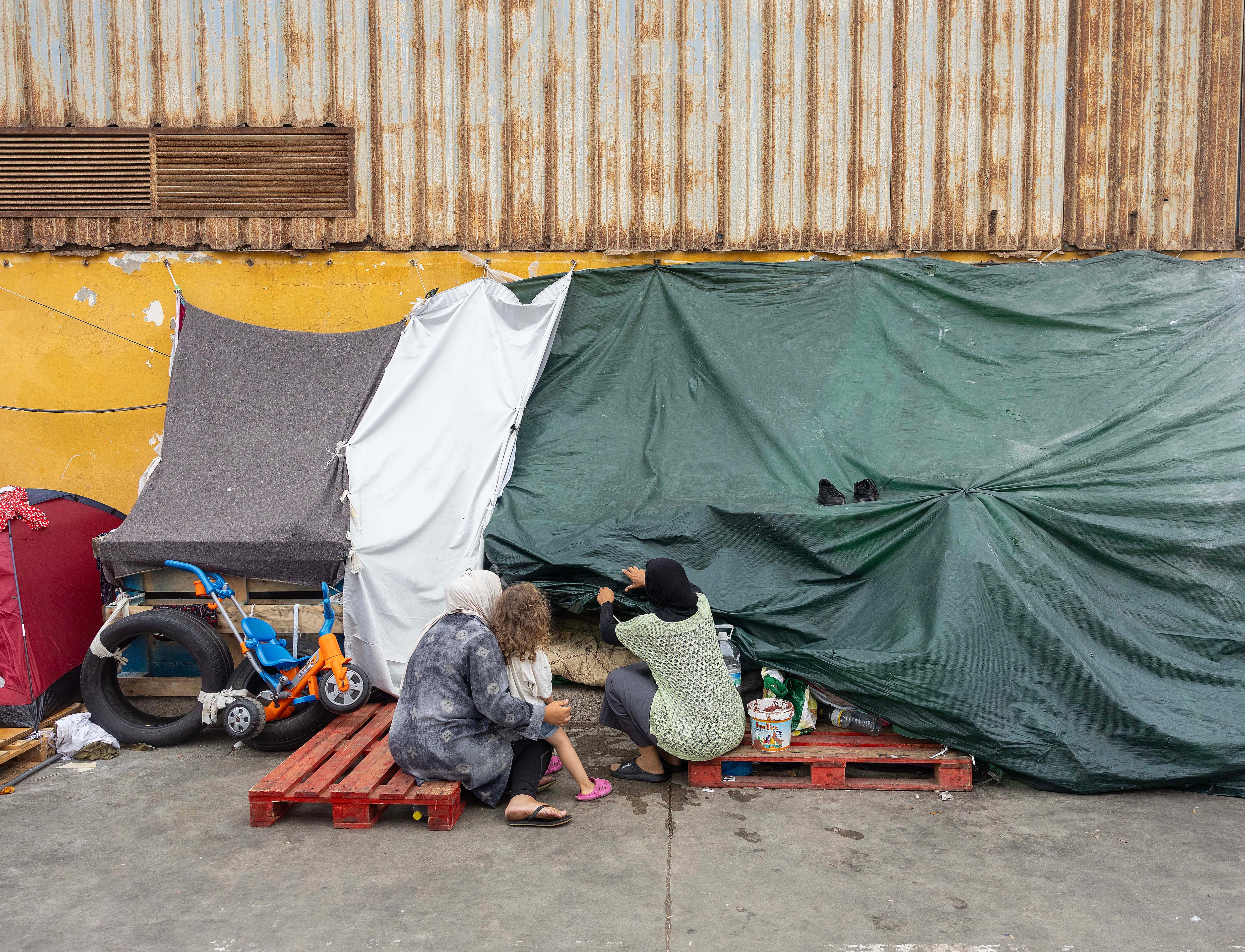
 Image: Javier Hernández
Fear and anxiety grip migrant families camping in Ceuta streets: “We keep walking around looking for somewhere to sleep”
Translated from Spanish and summarized by DistantNews. Read the original for the full story.
At a glance
News
Named sources
Ongoing story
- Migrant families camping in Ceuta’s El Tarajal industrial area say they were told they could no longer stay there from Thursday, although the Spanish government says no eviction operation is scheduled.
- Women with children said they searched neighborhoods for somewhere to sleep and feared what would happen to them.
- Informal settlements have expanded as authorities open temporary accommodation places for migrants whose legal situations are being assessed.
“I wish they had never told us.” That was how the uncertainty began for a group of migrant women in Ceuta. At 7 a.m. on Tuesday, they went to a building in the El Tarajal industrial estate where National Police officers were working. They said a security employee had warned them that they could no longer camp in the streets from midday Thursday.
The women said officers told them to calm down and sit, but gave them no explanation. When they realized nobody was going to attend to them, they began walking around the autonomous city, trying to find somewhere to stay. Farah Dayay and Nihad, Moroccan migrants aged 40 and 26, were among them. They are responsible for children aged 14 and four.
“We have been walking around looking for somewhere to sleep. We asked in Príncipe and in Sidi Embarek, where residents have camps for women and children, but there was nothing. We are afraid of what will happen to us,” Dayay said.
I wish they had never told us.
Government sources told EL PAÍS that they had no record of an eviction operation planned for the area that day. The industrial estate, close to the Moroccan border, has become one of Ceuta’s largest informal settlements during the migration crisis, alongside El Trampolín beach. Over the past month, makeshift huts built from tires, pallets and plastic have appeared there. A week earlier, the Luna Blanca charity distributed 850 meals in the area.
Dozens of homemade tents have also reappeared on El Trampolín beach. Authorities cleared the beach on Aug. 20 and moved 1,400 people who had been sleeping there to two temporary reception centers run by the Migration Ministry. Unofficial estimates put the number now sleeping there at about 1,000, although many more arrive when the Red Cross distributes food. Estimates of the total migrant population in Ceuta range from 6,000 to 12,000. The number is difficult to establish because people continue moving, while many still live on the streets or hide in wooded areas.
The fear in El Tarajal has grown during a week when the government opened new temporary reception places for humanitarian reasons. The centers provide shelter, hygiene and food while authorities examine migrants’ legal situations. They also offer a way to estimate how many people remain in the city. In the case of unaccompanied minors, the regional government must assume guardianship. Territorial Policy Minister Ángel Víctor Torres said officials had registered 1,612 minors who arrived between July 30 and 31, but still did not know the exact total.
We have been walking around looking for somewhere to sleep. We asked in Príncipe and in Sidi Embarek, where residents have camps for women and children, but there was nothing. We are afraid of what will happen to us.
About this summary
Originally published by El País in Spanish. Translated, summarized, and contextualized automatically by DistantNews, with a note on how the source frames the story. Not individually reviewed before publishing. How this works.
More Stories

From Our Blog

What Gets Lost (and Found) When News Is Translated

The Critical Role of Diaspora Media in Global News

What Travellers Should Know About Countries with Restricted Press

A Digital Nomad's Guide to Following Local News

How the Same Story Looks Different in Different Countries
