


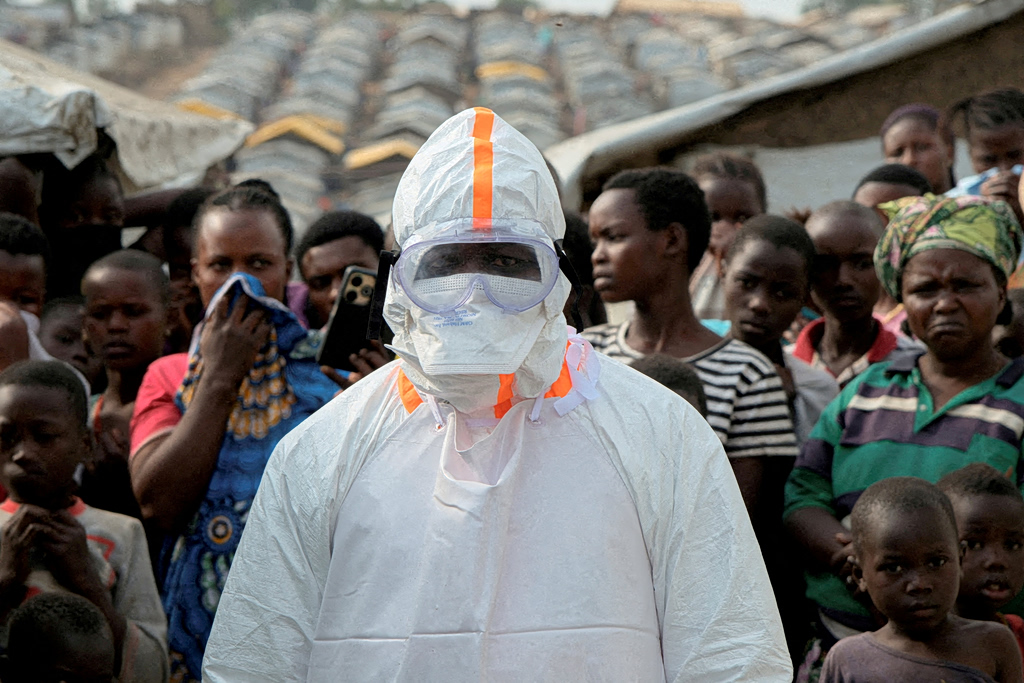
Fears of Worst Ebola Epidemic in History as Congo Cases Top 4,500, Deaths Reach 2,000
Translated from Greek, summarized and contextualized by DistantNews.
At a glance
News
Official statement
Ongoing story
- The Ebola epidemic in the Democratic Republic of Congo has surpassed 4,500 cases and 2,000 deaths, with health officials warning it could become the worst in history.
- Cases have been confirmed in six provinces, and the current outbreak is caused by the Bundibugyo strain, which lacks a vaccine or specific treatment.
- Experts fear the epidemic could last over a year if not controlled, increasing the risk of spreading to other African nations.
The Democratic Republic of Congo is grappling with a severe Ebola epidemic, as confirmed cases exceed 4,500 and the death toll climbs past 2,000. Health authorities are sounding the alarm, warning that the outbreak could escalate into the worst in recorded history if containment efforts falter.
Cases have spread across six provinces, including Ituri, North Kivu, South Kivu, Upper Uele, Tshopo, and the city of Buta in Lower Uele. The current epidemic is driven by the Bundibugyo strain, a particularly concerning development as it lacks both a vaccine and a specific treatment. This strain has been responsible for significant mortality in Africa over the past five decades.
If we do not stop this epidemic wave, it will last more than a year.
Dr. Jean Kaseya, director of the Africa Centres for Disease Control and Prevention (Africa CDC), expressed grave concern, estimating that the epidemic could persist for over a year without effective control measures. Such a prolonged outbreak would significantly heighten the risk of transmission to neighboring African countries, a scenario health officials are desperate to avoid. The reported figures only account for the last three months since the official declaration of the epidemic, with indications that the virus may have been circulating undetected since February.
All the studies we have indicate that the epidemic started around February, we have no idea what happened between February and May.
DistantNews Editorial
Originally published by Ta Nea in Greek. Translated, summarized, and contextualized by our editorial team with added local perspective. Read our editorial standards.
More Stories


From Our Blog

What Gets Lost (and Found) When News Is Translated

The Critical Role of Diaspora Media in Global News

What Travellers Should Know About Countries with Restricted Press

A Digital Nomad's Guide to Following Local News

How the Same Story Looks Different in Different Countries
