


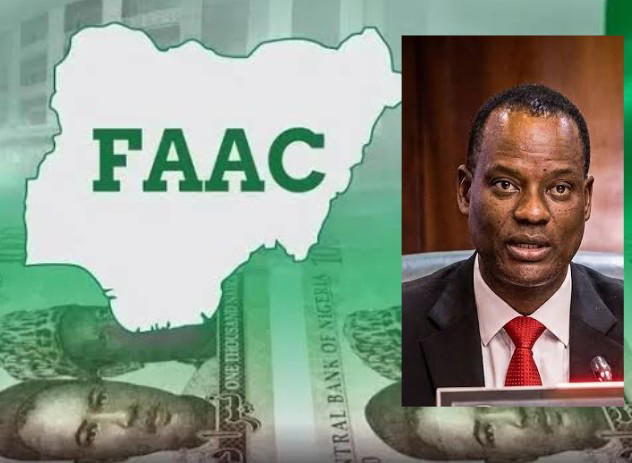
Federal allocations alone can't guarantee prosperity, says Finance Minister Oyedele
Translated from English, summarized and contextualized by DistantNews.
At a glance
News
Named sources
Context piece
- Nigeria's Finance Minister Taiwo Oyedele stated that federal allocations alone cannot ensure state prosperity, urging states to develop their own revenue sources.
- He reported that Nigeria saved an estimated N15.8 trillion from fuel subsidy removal and forex liberalization between June 2023 and December 2025, but this did not result in a large cash surplus for the federal government.
- Oyedele emphasized that the government's wage bill exceeded these savings, and reforms reduced the overall borrowing burden, shifting the economy towards production and investment.
Nigeria's Minister of Finance and Coordinating Minister of the Economy, Prof. Taiwo Oyedele, has asserted that states cannot rely solely on federal allocations for prosperity. He urged them to cultivate sustainable revenue streams and boost economic growth.
Oyedele revealed that Nigeria recorded estimated savings of N15.8 trillion from the removal of fuel subsidy and the liberalization of the foreign exchange market between June 2023 and December 2025. However, he clarified that these reforms did not leave the Federal Government with a substantial cash reserve as commonly believed.
Nigeria must move from an allocationdependent economy to one driven by production, investment and job creation.
Speaking at the 2026 National Council on Finance and Economic Development (NACOFED) conference in Owerri, Imo State, Oyedele highlighted that the Federal Government's wage bill significantly exceeded the savings from subsidy removal. He insisted that the government's reforms have successfully reduced the overall borrowing burden.
The figures tell a financing story, not simply a savings story.
He stressed the need for stronger fiscal federalism, improved revenue generation, and economic diversification to enhance Nigeria's resilience against economic shocks. "Nigeria must move from an allocation-dependent economy to one driven by production, investment and job creation," Oyedele stated. He noted that monthly federation account allocations have risen from between N300 billion and N600 billion before 2023 to over N2 trillion due to recent economic reforms.
Of the N15.8 trillion in "subsidy savings," the federal government received N5.43 trillion, state governments N6.52 trillion, and local government councils N3.88 trillion. Oyedele explained that the federal government generated an additional N20.4 trillion from subsidy savings, increased revenues, and borrowing during the period but spent N30.64 trillion on wages, debt servicing, infrastructure, electricity subsidy, and other obligations. "The figures tell a financing story, not simply a savings story," he said, adding that the savings eased fiscal pressure and reduced the need for borrowing.
The N15.8 trillion commonly described as subsidy savings was not retained by the FG alone. It was shared across the federal, state and local governments, as well as other statutory beneficiaries.
DistantNews Editorial
Originally published by Vanguard in English. Translated, summarized, and contextualized by our editorial team with added local perspective. Read our editorial standards.
More Stories


From Our Blog

How the Same Story Looks Different in Different Countries

What Gets Lost (and Found) When News Is Translated

The Critical Role of Diaspora Media in Global News

What Travellers Should Know About Countries with Restricted Press

A Digital Nomad's Guide to Following Local News
