


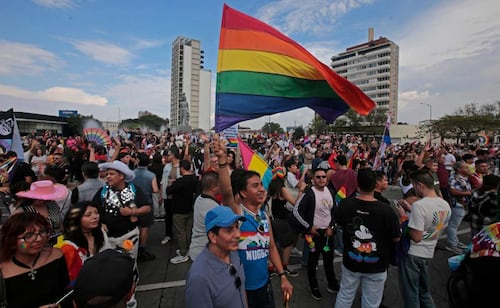
Federal judges strengthen LGBTQ+ rights in Mexico, Jufed highlights progress
Translated from Spanish, summarized and contextualized by DistantNews.
At a glance
News
Named sources
Context piece
- The National Association of Circuit Court Judges and Federal District Judges (Jufed) highlighted federal judges' rulings that strengthened protections for LGBTQ+ rights in Mexico.
- These rulings specifically advanced marriage equality, recognition of diverse families, gender identity, and birth certificate rectifications.
- Jufed emphasized that these legal advancements are the result of decades of social struggle, strategic litigation, and the independent work of federal judges, aligning with international human rights standards.
Mexico's federal judiciary has played a crucial role in advancing the rights of the LGBTQ+ community, according to the National Association of Circuit Court Judges and Federal District Judges (Jufed). The association highlighted that federal judges have issued significant rulings that bolster the protection of human rights for individuals of diverse sexual orientations.
These judicial decisions have particularly impacted areas such as marriage equality, the legal recognition of diverse family structures, and the affirmation of gender identity. Jufed also noted that federal judges have facilitated the rectification of birth certificates to align with individuals' gender identities. Furthermore, the association pointed to guarantees of social security and labor rights for same-sex couples, as well as protections for children and adolescents against discrimination.
Jufed underscored that these legal achievements are not solely the product of judicial action but are built upon decades of social activism, strategic legal challenges, and constitutional protections. The association credited the "technical and independent work of federal judges" for materializing the constitutional principle of equality and non-discrimination. Federal courts have served as a vital avenue for enforcing rights that were long denied due to prejudice, institutional exclusion, or discriminatory norms.
The association emphasized that these judicial criteria align with international human rights standards, reflecting the professional, specialized, and independent work of federal judges. Jufed stated that the judicial career itself serves as an institutional guarantee for fundamental rights, ensuring that court decisions are grounded in technical knowledge, experience, and independence. "These precedents have contributed to consolidating standards of equality and non-discrimination that are now part of the framework for the protection of human rights in Mexico. Because dignity, equality, and freedom admit no exceptions," Jufed asserted.
DistantNews Editorial
Originally published by El Universal in Spanish. Translated, summarized, and contextualized by our editorial team with added local perspective. Read our editorial standards.
More Stories


From Our Blog

What Press Freedom Means for the News You Read

What Gets Lost (and Found) When News Is Translated

The Critical Role of Diaspora Media in Global News

What Travellers Should Know About Countries with Restricted Press

A Digital Nomad's Guide to Following Local News
